Standardizing master rolls into market-ready widths is a critical bottleneck in manufacturing. Inefficient converting processes lead to high scrap rates. They also cause telescoped rolls and downstream packaging failures. You must address these bottlenecks to maintain profitable operations. A slitting machine is highly engineered industrial equipment. It unwinds wide master rolls of material. It then continuously slits them into narrower widths. Finally, it rewinds them uniformly onto individual cores. This guide bypasses surface-level definitions. We provide production managers and procurement teams with a practical decision-stage framework. You will learn how to evaluate, specify, and select the right slitter for your operations. We explore machine architecture, material profiling, and real-world troubleshooting.
Key Takeaways
Yield over Speed: Maximum operating speed matters less than sustained web control; poor tension management negates throughput gains by increasing waste.
Blade-to-Material Matching: Selecting between razor, shear, and crush (score) slitting is non-negotiable and strictly dictated by material properties (e.g., BOPP film vs. non-wovens).
Rewind Mechanics Dictate Quality: Differential winding shafts are critical for multi-slit setups to compensate for minor thickness variations across the master roll.
1. System Architecture: How Slitting Machines Control Web Tolerances
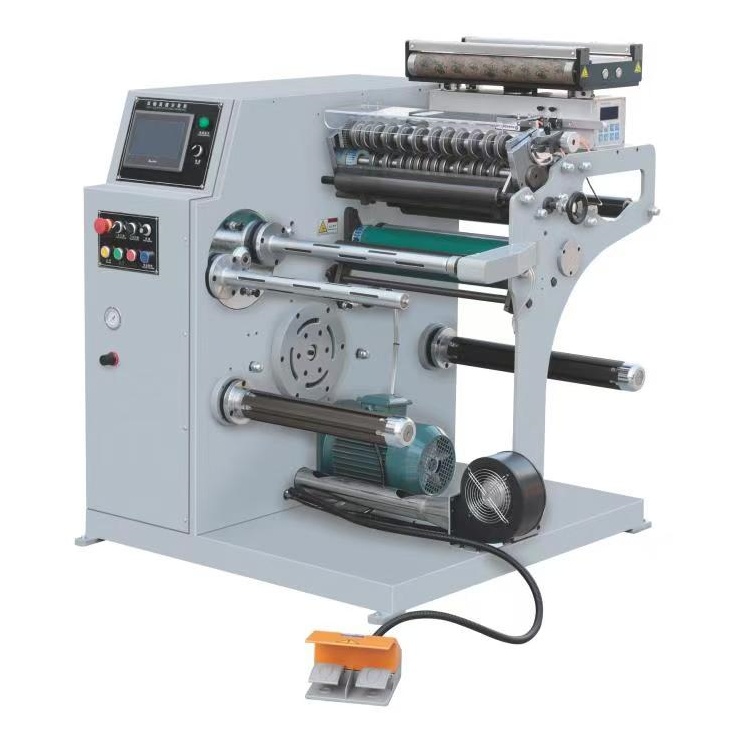
To understand how these machines work, we must deconstruct them into three functional zones. This highlights where failure points typically occur. You can prevent material defects by mastering these core mechanisms.
The Unwinding Section (Defect Prevention)
This zone dictates the stability of the entire process. If material enters the machine poorly, it exits poorly.
Shaftless vs. Shafted Stands: Shaftless configurations drastically reduce master roll loading times. They eliminate the need to drive a heavy steel bar through the core. This design requires less physical exertion from operators. It also minimizes handling damage during frequent roll changes.
Active Edge Guiding: Rolls are rarely wound perfectly straight from the paper mill. Active edge guiding integrates ultrasonic or optical sensors. These sensors read the web edge in real-time. They command mechanical actuators to shift the unwind stand laterally. This dynamically corrects telescoping or misalignment before the material reaches the knives.
The Slitting Section (The Cutting Interface)
The cutting zone defines your final edge quality. You must match the blade mechanism to your substrate.
Razor Slitting: This method pulls the web through a stationary or oscillating razor blade. It is ideal for an Automatic plastic film slitting machine handling thin, uniform materials. It offers a highly cost-effective setup. However, it requires frequent blade changes to prevent heat buildup and melted plastic edges.
Shear Slitting (Rotary): This system functions exactly like scissors. It uses an upper male blade and a lower female blade. Shear cutting is mandatory for an Automatic paper roll slitting machine. It cleanly slices dense materials like paper, foils, and laminates without generating excessive dust.
Crush/Score Slitting: This setup utilizes a pneumatically loaded blade. The blade presses the web against a hardened steel anvil roller. It severs the material through blunt force rather than a sharp edge. It works best for dense, abrasive, or variable-thickness materials like sandpaper and non-wovens.
The Rewinding Section (Final Package Quality)
The rewind section determines how well the final product behaves in downstream packaging machinery.
Center vs. Surface Winding: Center winding applies rotational torque directly to the winding core. Surface winding applies torque to the outside diameter of the roll via a driven drum. Advanced slitting machines combine both methods to handle highly sensitive webs.
Differential Slip Shafts: Master rolls always have minor thickness variations across their width. Differential shafts act as the industry standard to overcome this profile variation. They feature independent friction rings. These rings slip at varying rates. They ensure uniform tension across multiple narrow rolls sharing the exact same shaft.
2. Equipment Typology: Aligning Machinery with Material Profiles
Selecting the right machinery class is critical. You must categorize machines by their target applications. This helps buyers shortlist the correct equipment class efficiently.
Paper & Board Converting
Paper generates significant dust and debris when cut. The machinery requires robust vacuum extraction systems. It also relies heavily on rotary shear slitting to prevent edge fraying.
Equipment Focus: An Automatic Paper Slitting Rewinding Machine handles high-volume Kraft, thermal paper, or POS register rolls. These machines prioritize heavy-duty frames. Rigid frames absorb harmonic vibration during high-speed production runs.
Flexible Packaging & Films
Plastic films stretch easily. They demand extreme tension sensitivity to prevent stretching or wrinkling. Static electricity is another major hurdle you must manage.
Equipment Focus: A BOPP Plastic Roll To Roll Slitting Machine features closed-loop tension control. It uses load cells to monitor web pull constantly. Manufacturers also install active static elimination bars to discharge electricity before rewinding.
Narrow Web & Label Production
Label converting involves shorter runs and frequent job changes. The process prioritizes rapid changeovers and a compact footprint. It also requires precise matrix waste removal to separate the die-cut scrap from usable labels.
Equipment Focus: A Small roll label slitter machine or a multi-purpose Small Slitting Rewinding Machine is ideal. They handle highly customized jobs efficiently. Their ergonomic design lets a single operator manage the entire workflow easily.
Log Slitting (Non-Rewind)
This process differs entirely from traditional rewinding. A log slitter slices an entire master roll like a loaf of bread. It cuts through the material and the core simultaneously without unwinding it. This method remains highly specialized. It serves industries producing adhesive tapes, dense foams, and specific industrial textiles.
3. Essential Evaluation Criteria for Procurement
We developed a definitive checklist for comparing OEMs. You must assess machine specifications strictly against your daily production goals.
Automation and Setup Reduction
Evaluate auto-knife positioning systems versus manual setup blocks. Manual blade positioning takes hours on complex multi-slit jobs. Auto-positioning reduces this changeover downtime to mere minutes. The automated system uses servo motors to slide blade holders into exact programmed coordinates. This completely eliminates human measurement errors.
Tension Control Logic
Avoid open-loop pneumatic brakes for demanding materials. Instead, look for PLC-driven, closed-loop systems. These systems utilize load cell rollers. Load cells physically measure the actual web pull. They send tension data back to the PLC. The controller then adjusts brake torque instantly. Transparent, programmable tension curves remain absolutely necessary for fragile materials.
Tolerance and Edge Quality Standards
Always demand verifiable test data before purchase.
For metal processing: Demand accurate "Burr Tolerance" data. You should aim for burrs measuring less than 5% of the material thickness.
For flexible films: Assess edge straightness. Look closely for micro-tears under magnification.
For coated papers: Check for flaking or coating fracture along the slit line.
Safety and Compliance Realities
Verify adherence to regional machine guarding standards. Check for ANSI, CE, or OSHA lock-out/tag-out compatibility. Automated blade guards protect operators during web threading. Optical safety curtains act as baseline requirements today. They instantly halt the drive motors if a worker breaks the infrared safety barrier.
Procurement Criteria Overview
Evaluation Category | Standard Requirement | Advanced / High-End Requirement |
Knife Positioning | Manual measurement and locking | Servo-driven automatic positioning |
Tension Control | Open-loop ultrasonic diameter sensors | Closed-loop load cell integration |
Rewind Shafts | Standard air-expanding shafts | Pneumatic differential slip shafts |
Safety Features | Physical barrier guards, E-stops | Optical safety curtains, laser scanners |
4. Implementation Realities & Production Troubleshooting
Procuring the machine represents only the first step. You must understand post-purchase realities and common failure modes. Operational expertise prevents prolonged downtime.
Facility Integration
Installation requires careful facility planning. Assess your floor loading requirements before the machine arrives. Heavy-duty slitting lines exceed standard concrete slab capacities. You must ensure stable pneumatic supply consistency. Air drops directly impact crush cutting force and air shaft grip. Finally, provide clean, isolated power delivery for sensitive PLCs and servo drives. Voltage spikes easily corrupt operating logic.
Diagnosing Web Wrinkling & Curling
Web wrinkling usually points to misaligned idler rollers. It can also stem from overly aggressive tension zones.
Best Practice: Establish a strict baseline for web path parallelism during installation. Use a precision dial indicator. Ensure every roller sits perfectly parallel to the unwind chucks. If wrinkling persists after alignment, check for uneven nip roller pressure.
Correcting Poor Slit Quality (Dusting or Rough Edges)
Rough edges often symptomize incorrect blade-to-anvil overlap in shear slitting. Operators sometimes use dull blades and apply extreme pneumatic pressure to force a cut. This damages the anvil and creates excessive dust.
Common Mistake: Waiting for visual defects to change blades. Instead, implement a strict blade lifecycle management protocol. Replace or sharpen razor blades at set meter intervals.
Managing "Telescoped" or Loose Rolls
Telescoping occurs when inner roll layers slide sideways against outer layers. Root causes include inaccurate roll diameter sensor calibration. It also happens due to insufficient core locking on the rewind shaft. If the core slips even slightly, tension drops. Check the friction rings on your differential shafts weekly. Keep them free of paper dust and machine oil.
5. Slitting vs. Alternative Converting Processes
Buyers sometimes invest in the wrong process architecture. We must clarify technical boundaries between competing converting methods.
Slitting vs. Shearing
Slitting operates as a continuous, rotary process. It unwinds a web, cuts it longitudinally, and generates narrow rolls. Shearing functions as a linear, start-stop process. A heavy blade drops like a guillotine to yield single flat sheets. Slitting focuses on continuous length. Shearing focuses on discrete horizontal cuts.
Slitting vs. Cut-to-Length (Sheeting)
Cut-to-length lines unwind and flatten the master coil. They cut across the web horizontally to produce stacked flat materials. They do not rewind the material. If your downstream process requires flat blanks, you need a cut-to-length line. If your downstream process feeds from a roll, you need a slitting system.
Process Comparison Chart
Process Type | Cutting Action | Input Material Form | Final Output Form | Primary Industry Use |
Rewind Slitting | Rotary, continuous, longitudinal | Wide Master Roll | Narrow Rewound Rolls | Packaging, Films, Tapes |
Shearing | Linear, start-stop, guillotine | Flat Sheet or Plate | Smaller Flat Sheets | Heavy Metal Fabrication |
Cut-to-Length | Cross-cut, sequential | Wide Master Roll | Stacked Flat Sheets | Paper Sheeting, Metal Blanks |
Conclusion
A Slitting Machine is a highly specialized asset, not a generic commodity. At Yancheng Longterm Machinery Co.,Ltd, we understand that mechanical rigidity, precise blade selection, and software-driven tension control must work together perfectly to achieve stable, high-quality converting results. Choosing the wrong configuration can lead to persistent waste, poor roll quality, and costly operational headaches. To make the right investment, buyers should clearly document their material specifications, including thickness, tensile strength, and elasticity, define maximum master roll dimensions and required output tolerances, calculate daily changeover needs to determine the proper automation level, and request trial runs from Yancheng Longterm Machinery Co.,Ltd using actual production substrates to verify machine performance before purchase.
FAQ
Q: What is the difference between log slitting and rewind slitting?
A: The mechanical handling of the roll creates the difference. Log slitting slices through a solid, tightly wound master roll without unwinding it, much like slicing bread. Rewind slitting unrolls the web, passes it through stationary or rotary cutting blades, and then re-rolls the separated strips onto individual cores.
Q: How do differential shafts prevent loose rewind rolls?
A: Differential shafts use independent friction rings along the shaft body. Because master rolls have microscopic thickness variations, narrower strips build up at slightly different diameters. The slip rings allow each core to rotate independently at varying speeds. This applies consistent, uniform tension to every roll, preventing loose edges.
Q: Why is crush slitting not recommended for thin plastic films?
A: Crush slitting relies entirely on blunt force pressure. A dull blade presses the material against a hardened steel roller to sever it. Because thin plastic films are highly elastic, this blunt pressure stretches and distorts the substrate before breaking it. This creates a wavy, stretched edge rather than a clean cut.
Q: What is the standard burr tolerance for industrial metal slitting?
A: In industrial metal slitting, standard baseline limits cap edge burrs at 10% of the material's total thickness. However, precision applications require tighter controls. High-performance metal slitting operations typically target a strict burr tolerance of less than 5% of material thickness to prevent downstream stamping defects.


)