Manufacturing operations rely heavily on tight precision control. You might look at a Slitting Machine and see just a basic cutting tool. However, it functions as a vital control point for yield optimization. It dictates dimensional accuracy and prevents downstream defects in complex stamping or hydroforming processes. Choosing an incorrect configuration introduces severe hidden bottlenecks. Poor web handling quickly leads to edge waves, telescoping, excessive scrap, and long changeover delays.
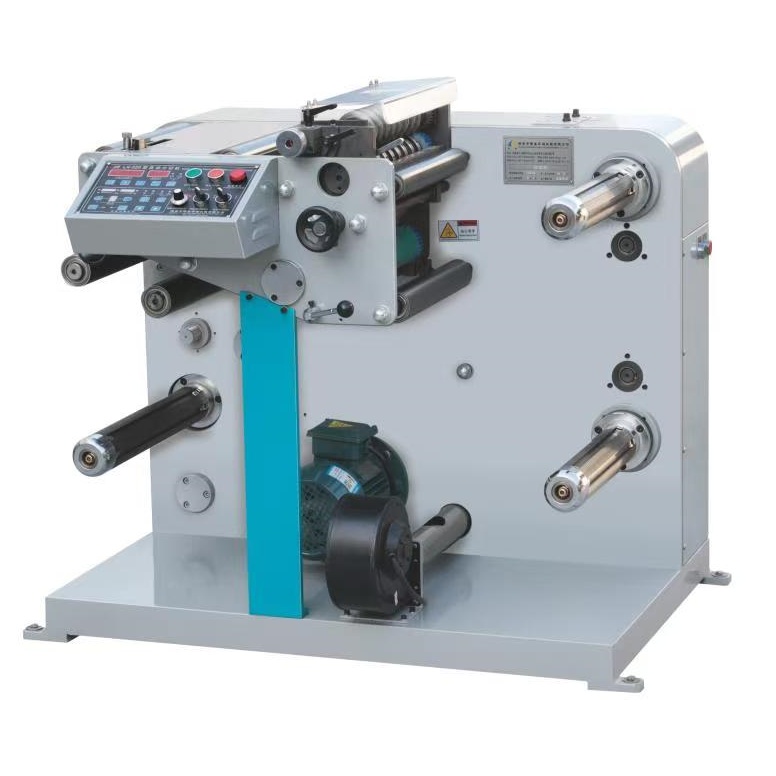
This guide provides a transparent, engineering-focused breakdown of how these mechanisms actually operate. We will explore how to match the system architecture directly to specific material behaviors. You will discover the critical evaluation criteria needed to specify your line correctly. By understanding these dynamics, you can make confident capital procurement decisions for your facility.
Key Takeaways
Material dictates penetration: The foundational "rule of thumb" in slitting—softer materials require deeper blade penetration to fracture, while harder materials require shallower cuts.
Tension is everything: Asynchronous recoiling (due to material crown effects) must be managed by advanced looping pits and tension stands to prevent st
ress-induced deformation.
Application specificity: Machine architecture varies drastically—from 20mm heavy-duty steel lines to highly calibrated automatic plastic film slitting machine setups—each requiring distinct web handling logic.
Changeover scalability: Profitability in short-run/JIT environments hinges on tooling changeover mechanisms (e.g., turret-head slitters vs. traditional crane-removable heads).
1. The Core Mechanics: A Step-by-Step Process Breakdown
Understanding the operational sequence helps demystify the technology. Equipment specifications at every stage directly impact the final output quality.
Loading & Uncoiling
The process begins at the entry point. Hydraulic entry coil cars load the heavy master coil. These heavy-duty cars easily handle capacities exceeding 30 tons. They carefully position the coil onto expanding uncoiler mandrels. The mandrels grip the inner diameter tightly. A major risk factor exists here. Poor edge guiding at the uncoiler creates lateral tracking errors. These tracking errors will propagate across the entire production line.
Straightening / Precision Leveling
Material memory often causes inherent defects. You must flatten the web before cutting. Precision levelers are mandatory for materials over 2mm thick. They eliminate pre-existing camber and remove wavy edges effectively. This preparation ensures the web enters the cutting zone perfectly flat. Skipping this step ruins width tolerances entirely.
The Slitting Arbor & Rotary Knives
Cutting physics rely on highly precise mechanical interactions. Hardened rotary knives slice continuously into the moving web. Rubber stripper rings hold the material steady and eject the cut strips. Precision spacers control the exact cutting width. Operators must adjust the horizontal clearance based on specific alloy properties. Vertical blade overlap dictates the exact fracture point. You must control these dimensions micrometrically via the HMI system.
Scrap Management (Edge Trimming)
Handling edge waste efficiently dictates your operational uptime. We categorize scrap equipment by material thickness and applied tension. Choosing the wrong scrap handler causes frequent line stoppages.
System Type | Max Thickness | Tension Profile | Operational Characteristic |
Scrap Ballers | < 0.187 inches | Zero tension | Winds scrap into tight bundles. Best for light gauge. |
Scrap Winders | Up to 0.250 inches | Medium tension | Pulls material actively. Suitable for medium gauge steel. |
Scrap Choppers | Up to 0.750 inches | High tension | Highest initial cost. Yields the highest scrap recovery value. |
Recoiling (The Exit Stage)
The final step requires perfectly stress-free winding. Customized mandrel blocks wind the narrow strips into tight coils. Industry professionals call these finished coils "mults". The exit stage requires precise alignment to prevent side-to-side camber. Tight, uniform mults are immediately ready for radial banding and shipping.
2. Solving the "Crown Effect": Loop Pits and Tension Control
Thickness variation across a master coil represents the most complex technical challenge in web processing. You must manage these variations to ensure quality.
The Problem
Steel mills roll metal using immense pressure. This rolling creates a thicker center profile. We call this the "crown effect". The outer edges run slightly thinner than the center strip. When rewinding these strips simultaneously, the thinner outer strips wind more loosely. Loose winding causes severe telescope defects. The coil laterally collapses under its own weight.
The Engineering Solution
You solve this asynchronous winding using a looping pit. The pit allows the center strips to hang down freely. It provides enough slack to equalize the pulling tension across the entire web. Engineers use a specific calculation model to determine the necessary pit depth. They base this formula on maximum outer diameter, inner diameter, and material thickness.
Tension Stand Evaluation
Tension stands generate the final winding force required for tight mults. You must evaluate two primary technologies:
Pad-type tensioners: These use heavy friction pads. They represent a cost-effective solution. However, they carry a high risk of scratching delicate surfaces.
Rotary roll tensioners: These utilize driven, synchronized rollers. They apply tension without dragging. They are ideal for sensitive surface finishes and soft alloys.
3. Classifying Slitting Machines by Material & Web Application
Machine architectures map directly to distinct industry use cases. Buyers must match the category exactly to their target materials.
Heavy, Medium & Light Duty Metal Slitting
Metal processing lines fall into three distinct operational thresholds. Heavy-duty lines cut structural steel exceeding 20mm in thickness. Medium-duty lines process gauges between 0.5mm and 8mm. These serve automotive and household appliance markets. Light-duty lines handle materials under 2mm. They focus heavily on high-precision electronic components.
Paper & Flexible Packaging Operations
Paper and packaging require completely different web handling logic. Facilities often deploy an Automatic paper roll slitting machine to manage massive master rolls. These systems emphasize heavy dust extraction and utilize sheer-cutting blades instead of rotary crush cut designs. For hybrid needs, an Automatic Paper Slitting Rewinding Machine provides high-speed web tensioning. It ensures the paper avoids tearing while maintaining a perfectly flush edge.
Film, Plastics, and Polymers
Plastic processing introduces thermal and elastic challenges. Stretching and thermal distortion pose massive risks. You must control precise torque values. An Automatic plastic film slitting machine uses advanced static-elimination bars to prevent the film from clinging to the rollers. Specialized facilities often rely on a BOPP Plastic Roll To Roll Slitting Machine. These units feature ultra-low tension sensors to prevent the polymer from necking down or deforming under load.
Narrow Web & Specialty Labels
Printed media and labels demand tight-tolerance edge guides. A Small Slitting Rewinding Machine fits perfectly into high-mix, low-volume environments. It integrates inspection automation to detect missing prints. Similarly, a Small roll label slitter machine focuses on fast roll-turnaround. It minimizes waste on expensive adhesive label stock.
4. Implementation Risks and Setup Vulnerabilities
Understanding hidden operational realities protects your investment. Several failure modes plague poorly specified machines.
Vibration and Arbor Alignment
Rigidity matters immensely. Microscopic vibration in the cutting arbors destroys width tolerances instantly. Vibration causes jagged edge quality. It creates microscopic burrs along the cut strip. Downstream aerospace or fuel-cell applications will universally reject these defects. Fuel cells rely on perfectly smooth edges to maintain stack seals.
Tooling Changeover Bottlenecks
Changeovers kill profitability in Just-In-Time (JIT) manufacturing environments. Traditional setups require operators to manually remove heavy heads using overhead cranes. This process routinely takes 45 minutes. You must move toward automated tooling. Turret-head slitters rotate fresh, pre-tooled arbors into the line immediately. They reduce total changeover downtime to under two minutes.
Operator Dependency vs. Automation
Relying on operator "feel" introduces massive quality variations. Older machines require operators to manually adjust tension brakes. We strongly advocate for modern HMI touchscreen controls. These advanced systems incorporate automatic feedback loops. They continuously monitor the rewind diameter and adjust the torque curves automatically. This eliminates human error completely.
5. Procurement Framework: Specifying Your Slitting Line
You need a concrete checklist when evaluating vendors. Demand verifiable data over generic marketing claims.
Tolerance Capabilities: Demand verified historical data on edge burr limits. Require proof of strict width tolerances (e.g., ±0.005 inches). Never accept generic "high precision" statements.
Packaging Automation Integration: The entire processing line runs only as fast as its packaging bottleneck. Evaluate the inclusion of downenders, radial banding tools, and automated stackers. A good rule of thumb is to evaluate lines based on sustainable "mults per hour".
Edge Conditioning as a Value-Add: Consider if the machine allows for modular edge rolling. Edge conditioning creates round or specially modified edge profiles. This capability allows you to serve higher-margin client needs directly.
Conclusion
A slitting machine operates as a highly complex system of synchronized tensions and precise clearances. It goes far beyond simply being a set of motorized blades. Your success depends entirely on managing web behavior.
Prioritize rigid arbor construction to eliminate vibration and prevent micro-burrs.
Invest in automated tension logic to remove dangerous operator dependency.
Focus heavily on tooling changeover speed over raw top-line processing speed to ensure maximum Overall Equipment Effectiveness.
We strongly encourage buyers to audit their most frequently processed master coils. Document the specific gauges, hardness levels, and historical defect rates before requesting vendor proposals. This data will ensure you procure the exact web architecture your facility needs.
FAQ
Q: Why is material hardness inversely related to blade penetration depth?
A: Soft metals are highly ductile. They require the rotary blades to penetrate deeply before they finally tear and fracture. Harder, brittle metals fracture much faster under pressure. For hard alloys, you use a shallower blade overlap to snap the material cleanly without causing excessive tool wear.
Q: What causes "telescoping" during the recoiling process?
A: Telescoping happens due to inconsistent tension profiles across the width of the web. The rolling crown effect causes outer strips to be marginally thinner. If you fail to utilize a proper looping pit to absorb the slack, the thinner strips wind loosely and collapse laterally.
Q: Can the same machine process heavy-gauge steel and thin aluminum?
A: Generally, no. A one-size-fits-all approach fails because horizontal blade gaps differ drastically between alloys. Heavy steel requires massive arbor rigidity and high-torque scrap choppers. Thin aluminum requires extremely sensitive rotary roll tensioners to prevent stretching and surface scratching.
Q: Why is a precision leveler necessary before the slitting head?
A: Pre-existing wavy edges or coil set cause the material to track poorly as it enters the knives. If the metal enters the slitting head with inherent curvature, the blades will cut unevenly. This ruins your width tolerances and increases your scrap rate.


)