Heavy steel processing demands immense mechanical power and uncompromising precision. You cannot always rely on outsourced service centers if you want absolute control over your production schedules. Bringing this capability in-house represents a major capital expenditure. However, it directly shrinks supply chain lead times and slashes customized material costs. The automatic thick steel coil slitting machine is an industrial-grade, heavy-duty line. We engineer it specifically to uncoil, longitudinally slit, and recoil steel master coils ranging from 8mm to 25mm in thickness.
Machinery distinctions matter greatly in this sector. The broader industry term encompasses equipment designed for flexible webs. You might see an Automatic paper roll slitting machine, an Automatic plastic film slitting machine, or even a specialized BOPP Plastic Roll To Roll Slitting Machine. Thick steel processing uses fundamentally different shear mechanics. It requires specialized hydraulic infrastructure, robust tension stands, and deep looping pit engineering. These components work together to handle up to 30-ton payloads safely and efficiently. In this guide, you will learn exactly how these massive systems operate and how to evaluate them for your facility.
Key Takeaways
- Thick steel slitting (typically >8mm up to 25mm) requires specialized pre-slitting straighteners to eliminate material defects like camber and wavy edges.
- The fundamental law of steel slitting dictates that harder materials require less blade penetration, while softer alloys require deeper penetration to fracture cleanly.
- High-end automation features (e.g., robotic tooling, automatic blade changes) can reduce setup times from hours to under 5 minutes, directly improving Overall Equipment Effectiveness (OEE).
- Evaluating a machine requires balancing production speed (e.g., 60-150 m/min) against strict precision tolerances (e.g., width tolerance ±0.1 mm, burr ±0.02 mm).
Light vs. Medium vs. Heavy-Duty: Classifying Slitting Machines
We classify metal slitting lines based primarily on the maximum thickness of the material they can process. The 2mm mark serves as an important engineering threshold. When material thickness stays under 2mm, we consider it light-duty processing. These lines rarely require heavy pre-straightening equipment. The material yields easily to standard tensioning.
Medium-duty lines process steel between 2mm and 8mm thick. They introduce a new layer of complexity. These systems require basic coil straighteners before the slitting blades. They also need foundational tensioning mechanisms. This prevents loose recoiling later in the process. Without proper tension, the slit strips will telescope and slide off the mandrel.
Heavy-duty slitting handles thick steel from 8mm up to an immense 25mm. You need severe engineering upgrades to manage this material. These lines feature massive multi-cylinder hydraulic uncoilers. They utilize heavy-duty straighteners to flatten stubborn steel plates. Dual-slitter heads allow operators to execute rapid changeovers between jobs. Furthermore, reinforced structural frames are mandatory. They must withstand extreme torsional shear forces when multiple blades strike the steel simultaneously.
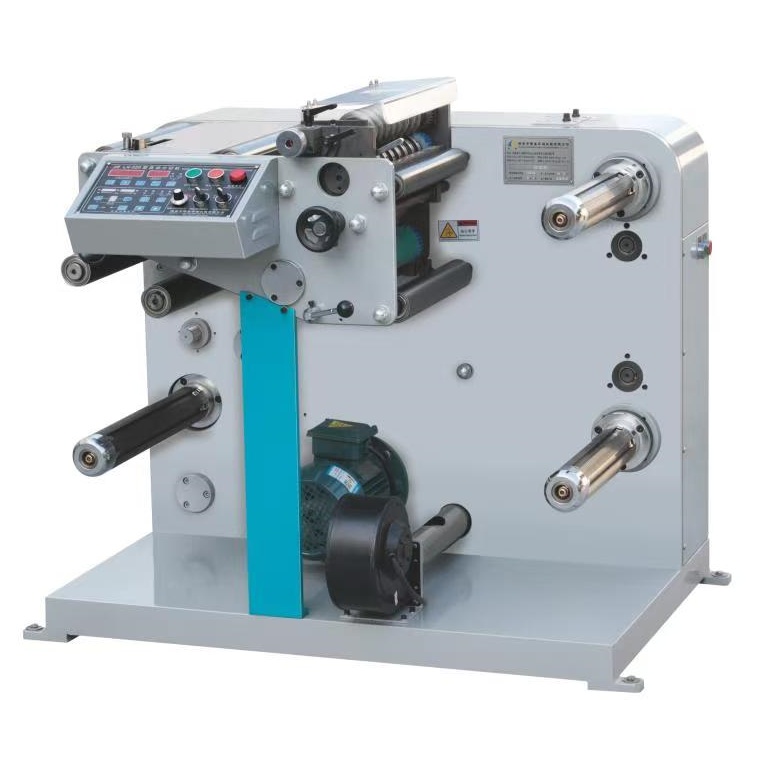
Contrast this heavy-duty reality with light web operations. Think of a Small Slitting Rewinding Machine or an Automatic Paper Slitting Rewinding Machine. In those systems, delicate friction rollers easily manage web tension. Even a basic Small roll label slitter machine operates on gentle pull dynamics. Thick steel acts completely differently. It requires immense, motor-driven braking and heavy isolation devices just to remain stable on the line.
The 6-Step Automated Slitting Process (How It Works)
Transforming a 30-ton master coil into perfectly slit narrow bands requires a highly synchronized sequence. We break down the automated slitting process into six critical steps.
1. Loading & Uncoiling
The process begins with the hydraulic entry coil car. This robust carriage lifts and transports payloads weighing up to 30 tons. It aligns the heavy master coil precisely with the uncoiler. An expandable mandrel then inserts into the coil's inner diameter. It expands outward to grip the steel tightly. This mechanism maintains constant back-tension as the material feeds into the machine.
2. Straightening / Leveling
You must view straightening as a critical quality-control step. Thick steel often comes from the mill with lateral curvature, known as "camber." It may also feature "wavy edges." Removing these defects is non-negotiable before the steel reaches the blades. Heavy-duty levelers use multiple staggered rollers to yield the steel, flattening it completely.
3. The Slitting Process
The actual cutting happens here. The mechanism relies on parallel arbors, rotary slitting knives, and rubber stripper rings. The steel feeds between the upper and lower arbors. The fundamental rule of thumb applies: blade penetration depth must remain inversely proportional to material hardness. Harder steel requires less blade penetration, snapping cleanly under pressure. Softer steel requires deeper penetration to shear without stretching.
4. Scrap Edge Management
Master coils never have perfectly uniform edges. The outermost edges must be trimmed away. We integrate a scrap winder to handle this dangerous jagged material. Driven by friction wheels and decelerators, the winder continuously spools the edge trimmings. This automation ensures operator safety and keeps scrap dense for easy recyclability.
5. Looping Pit & Tensioning
Steel master coils exhibit a "crown" phenomenon. They are marginally thicker in the center than at the outer edges. Because of this, the slitter yields strips of slightly different lengths. A looping pit—a deep foundation trench—absorbs these length discrepancies. It allows the longer strips to hang down freely. Afterward, the tension stand applies uniform drag. This ensures both center and outboard strips (called mults) recoil tightly without sagging.
6. Recoiling & Extraction
The final step winds the slit steel back into tight coils. Overarm separators utilize tooling discs to guide the strips, preventing them from interleaving or overlapping. Once fully wound, piano-key extraction cars move in. They support the bottom of the individual coils and slide them off the mandrel. You do not require on-mandrel strapping, which heavily reduces machine downtime.
Core Evaluation Framework: Precision, Speed, and Structural Integrity
Procuring a heavy-duty slitting line requires stringent technical evaluation. You must match the machine's engineering with your specific production demands.
Matching Yield Strength to Capacity
We strongly warn buyers against under-specifying machine capacity. You cannot look at material thickness alone. A machine rated for 10mm mild carbon steel may completely stall when processing 8mm high-tensile stainless steel. High yield strength demands significantly higher motor torque and vastly superior arbor rigidity. Always base your specifications on the highest yield strength material you plan to run.
Balancing Speed and Quality
Speed and precision fight against each other in thick steel processing. Standard heavy-duty lines operate reliably between 0 and 60 meters per minute. Advanced, highly engineered lines can push speeds up to 150 meters per minute. However, higher speeds demand incredibly strict vibration control. If the machine frame lacks mass, high-speed slitting will cause arbor deflection. This destroys your burr tolerances. Your target should always remain a burr tolerance of ±0.02 mm.
Tooling Setup and Flexibility
You must evaluate the tooling setup efficiency. Changing heavy slitter blades manually takes hours. Modern setups use a double slitter head or a rotating turret system. This brilliant design allows operators to set up the next job's knife configuration offline. They do this while the machine is actively running the current job. When the run finishes, they simply swap the heads, minimizing downtime to just minutes.
| Evaluation Metric | Standard Line Performance | Advanced Line Performance |
| Production Speed | 0 - 60 m/min | 100 - 150+ m/min |
| Tooling Changeover | Manual (45 - 90 minutes) | Turret / Automatic (< 5 minutes) |
| Burr Tolerance | ±0.05 mm | ±0.02 mm |
| Vibration Control | Basic anchor bolting | Reinforced mono-block frame |
How Industry 4.0 Automation Improves ROI and Mitigates Labor Risks
The heavy machinery sector faces a severe skilled labor shortage. Experienced machine operators are retiring. Finding personnel who understand the nuanced physics of blade penetration and tension control proves difficult. Automated slitting lines present a direct solution to this declining availability. They embed the expertise into the machine's software.
Automated changeovers drastically alter your production efficiency. Modern features include the automatic adjustment of spacer shafts and automated blade locking systems. In the past, operators manually unlocked arbors, removed heavy tooling, and measured spacers with calipers. Today, software drives servo motors to position the blades perfectly. This compresses a 45-minute manual setup into a sub-5-minute cycle. Equipment spends more time cutting and less time sitting idle.
Predictive maintenance serves as another massive advantage. Digital integration introduces IoT sensors across the slitting line. These sensors track motor torque fluctuations, arbor vibration frequencies, and hydraulic fluid temperatures. The system monitors blade wear continuously. It alerts your maintenance team before a failure occurs. This shifts your facility from a reactive breakdown model to a planned schedule. Your Overall Equipment Effectiveness (OEE) remains predictably high.
Vendor Shortlisting: Choosing the Right Manufacturing Partner
Selecting the right supplier determines the lifelong success of your slitting operation. You are buying a highly integrated system, not a standalone tool.
First, demand engineering customization. Ensure the supplier can engineer the looping pit depth accurately. They must calculate the exact straightener roll diameter and motor kilowatts specifically for your facility. They base this on your heaviest, widest, and highest-yield master coils. A rigid, one-size-fits-all catalog machine will fail under extreme edge cases.
Second, insist on component transparency. Demand a comprehensive Bill of Materials (BOM). This document must detail the specific origins of all core components. You need to know the PLC brand driving the automation. You must verify the origin of the hydraulic cylinders and check the exact dynamic load ratings of the arbor bearings. High-quality internals prevent catastrophic downtime.
Finally, evaluate the vendor's implementation process and post-sale realities. Heavy slitting lines require extensive foundational work. Do they provide accurate, on-site foundation blueprints for the deep looping pits? Do they offer comprehensive digital interface training? Your team needs extensive operator safety instruction to manage 30-ton payloads moving at 100 meters per minute.
Conclusion
- Investing in an automatic thick steel coil slitting machine requires mastering shear physics and heavy-duty logistics.
- You must prioritize rigid machine frames and heavy-duty straighteners to combat material camber and high yield strengths.
- Automation technologies like turret heads and robotic tooling directly mitigate the skilled labor shortage while boosting daily output.
- Looping pits and tension stands are non-negotiable for thick steel to manage the natural "crown" of master coils.
For your next steps, we advise procurement teams to audit their historical coil purchasing data comprehensively. Focus specifically on your maximum yield strength, maximum material thickness, and maximum coil weight. Use this specific data to build a rigorous technical brief before you request any vendor proposals.
FAQ
Q: What is the difference between a master coil and a mult?
A: The master coil represents the wide, original steel roll received directly from the steel mill. A "mult" is the standard industry term for the narrower, processed steel strips created after the material passes through the slitting knives.
Q: Why is a looping pit absolutely necessary for slitting thick steel?
A: Steel master coils usually feature a crown. They are marginally thicker in the center than at the edges. This thickness variation yields slit strips of slightly different lengths. The looping pit provides physical space for longer strips to hang freely. This equalizes the tension before they enter the recoiler.
Q: Can a standard slitting machine be modified to cut thick steel?
A: No. While operators adjust blades easily on an Slitting Machine designed for thin aluminum, thick steel requires much more. Materials over 8mm require heavy-duty straighteners, massive hydraulic hold-downs, and industrial tension stands. You cannot retrofit these components onto light-duty frames.
Q: How do operators control the burr on the edge of slit thick steel?
A: Operators minimize burr by maintaining ultra-precise clearance between the upper and lower rotary knives. This requires an exceptionally rigid machine frame to prevent arbor deflection under heavy tonnage. It also requires setting the proper blade penetration depth based on the specific steel grade.


)