A Slitting Machine is a critical piece of industrial equipment designed to convert wide master coils or rolls into narrower, production-ready widths. Engineers often refer to these newly cut segments as mults or strands. At the decision stage, investing in or upgrading this equipment isn't just about cutting material. It is about eliminating downstream production bottlenecks. It enforces microscopic tolerances across your production line. Furthermore, it drastically reduces edge-trim waste.
Industry professionals notoriously describe slitting as part art, part science. Managing web tension challenges even the most experienced operators. You must navigate material imperfections like crowning while configuring complex blade setups. Precision engineering drives the entire process. This guide breaks down how these systems function. We explore the physical variables involved. You will also learn how to evaluate different tiers of equipment based on your specific substrate and volume requirements.
Key Takeaways
- Process Efficiency: Slitting machines convert materials exponentially faster than cross-cutting or shearing, often turning 8-10 hours of traditional cutting work into a continuous 1-hour process.
- Tension is Everything: High-quality slitters utilize looping pits and advanced tension stands to combat material inconsistencies (e.g., center thickness variations) and prevent defects like "telescoping."
- Material Agnosticism with Niche Configurations: While the foundational physics (unwind, slit, rewind) remain identical, tooling must be strictly matched to the substrate—whether handling heavy-gauge steel, paper rolls, or BOPP plastic films.
- Automation Drives ROI: Modern systems focus on Overall Equipment Effectiveness (OEE) by reducing manual tooling changeovers from hours to under 5 minutes using robotic setups and dual-slitting heads.
The Core Mechanics: How the Slitting Process Actually Works
Deconstructing the hardware-to-process relationship reveals the true technical expertise behind material conversion. The process operates through three distinct, highly synchronized phases. Every phase relies on the previous step executing flawlessly.
- Uncoiling (Decoiling): The operation begins at the unwind station. Operators load the master roll onto an expanding mandrel. This mechanism grips the inner diameter securely. Edge guides then detect lateral shifts. They feed the material perfectly straight into the cutting head.
- The Slitting Phase (Arbors & Knives): The web feeds longitudinally through a heavy-duty cutting head. This head consists of parallel arbors holding rotary knives. Precise spacing rings keep the knives aligned.
Engineering Rule of Thumb: Penetration depth is inversely related to material hardness. Harder materials require less blade penetration. They snap easily once scored. Conversely, softer materials require deeper penetration to fracture cleanly without tearing. - Recoiling (Rewinding): The system continuously rewinds the newly cut narrower strands. Here, operators encounter the toughest physical challenges.
Tension dictates recoiling success. Master coils rarely lie perfectly flat. Manufacturers often produce them "crowned." This means they are thicker in the center. Without proper tensioning stands, physics takes over. Thicker center strands rewind faster. They pull tighter than the thinner outer strands. This discrepancy leaves the outer coils dangerously loose. Eventually, it causes structural failure during transport.
Evaluating Slitting Equipment by Material Application
Different materials demand entirely different machine architectures. You must categorize equipment types carefully. This helps buyers shortlist hardware based on exact substrate requirements.
Heavy-Duty & Metal Coil Slitting: Heavy-gauge processing requires immense structural rigidity. These lines feature high-torque arbors. They use heavy-gauge straighteners for materials exceeding 2mm in thickness. Looping pits are non-negotiable. They absorb strand speed variations. The primary focus remains on maintaining tight squareness tolerances. You want less than 0.010 inches of variance for downstream CNC or automated stamping processes.
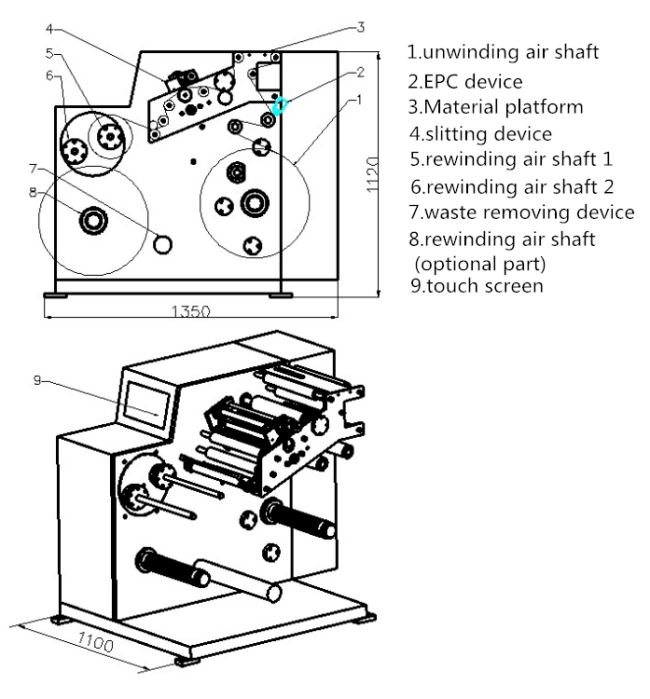
Paper & Label Converting: Paper materials behave differently. They generate dust and tear easily under erratic tension. Facilities handle these substrates using an Automatic paper roll slitting machine or a dedicated Small roll label slitter machine. The process relies on dust-free shear cutting. It prioritizes extreme edge smoothness. Precise tension control prevents sudden web snapping during high-speed runs.
Film & Flexible Packaging: Plastics stretch easily. They wrinkle under improper tension. Manufacturers use specialized systems like an Automatic plastic film slitting machine or a BOPP Plastic Roll To Roll Slitting Machine. These systems utilize razor or shear slitting. Engineers tailor them specifically for thin, high-stretch materials. Excellent edge guiding prevents edge stretching and ensures flush rolls.
Compact & Agile Solutions: Some facilities do not need massive pit-style lines. They handle lower-volume or secondary processing. A Small Slitting Rewinding Machine or an Automatic Paper Slitting Rewinding Machine fits this niche perfectly. They offer localized, agile control. They save immense floor space while delivering clean cuts for labels and secondary packaging.
| Substrate Category | Primary Cutting Method | Key Structural Requirement | Common Defect to Avoid |
| Heavy Metals (>2mm) | Crush / Rotary Shear | High-Torque Arbors, Looping Pits | Camber, Micro-vibrations |
| Paper & Labels | Shear Slitting | Dust Extraction, Tension Control | Web Snapping, Dust Buildup |
| BOPP / Plastic Films | Razor / Shear Slitting | Low-Friction Rollers | Wrinkling, Edge Stretching |
The Business Case: Features-to-Outcomes Mapping
Modern equipment connects raw capabilities directly to bottom-line ROI and ESG goals. Let us examine how physical machine features map to operational outcomes.
Downstream Consistency: Flawless edge conditions and tight width tolerances matter immensely. They directly reduce jamming. Secondary processes depend on perfectly sized raw material. Automated stamping, injection molding, and continuous packaging lines halt instantly if strand widths vary. Upgrading your slitter eliminates these downstream micro-stops.
Waste Reduction & Lean Manufacturing: Precision eliminates the need to trim excess material later. High-end edge guiding systems track the web perfectly. They minimize edge scrap. You maximize the yield per master roll. This direct material efficiency supports green manufacturing initiatives by keeping expensive scrap out of recycling bins or landfills.
Quality Assurance & Defect Prevention: Advanced systems lock layers in place. They prevent "telescoping," a defect where roll layers slide out of alignment and look like a collapsed telescope. Modern tensioning ensures burr-free edges. This requirement remains strictly non-negotiable in high-stakes industries. Aerospace manufacturing and fuel-cell assembly reject any material showing microscopic edge burrs.
Key Components to Scrutinize During Vendor Evaluation
Evaluating vendors requires a strict technical checklist. You must assess equipment durability and operational performance before signing any purchase order. Focus your audit on these specific hardware components.
- Tooling Precision (Knives & Spacers): Assess the metallurgical quality of the slitting knives. You must choose between high-speed steel and tungsten carbide based on your substrate. Poor arbor alignment causes micro-vibrations. These vibrations lead directly to out-of-spec cuts and rapid blade degradation.
- Scrap Winders: Edge trim is practically unavoidable due to raw master coil sizing. Ensure the manufacturer integrates robust dual scrap winders. These winders must keep pace with maximum line speeds. Otherwise, scrap jams will halt the entire line.
- Looping Pits & Tension Stands: Look for tensioning solutions matched to your material. For metals featuring varying cross-sectional thickness, a looping pit is strictly mandatory. It absorbs excess slack. It normalizes the web before the strands enter the recoiler tension stand.
- Safety & Ergonomics: Examine the operator interface. Modern standards dictate "hands-free" threading. Look for automatic separators. These eliminate the need for operators to manually handle sharp steel strands. They also stop operators from repetitively lifting heavy separator discs.
Automation, OEE, and the Shift to "Smart" Slitting Lines
Scalability and future-proofing dominate current equipment discussions. The transition to "smart" lines significantly impacts your Overall Equipment Effectiveness (OEE).
Minimizing Changeover Times: Traditional blade setups take hours of manual wrenching. Operators measure spacers by hand. Look for modern machines featuring offline tooling carousels. Evaluate robotic slitter tooling setups. Alternatively, consider machines equipped with second slitting heads. These upgrades reduce tooling changeovers from a brutal 3-hour ordeal to a simple 2–4 minute process.
Data & Predictive Maintenance: Top-tier manufacturers now integrate extensive IoT capabilities. Smart sensors monitor arbor vibration in real-time. They track blade wear over thousands of miles of substrate. They measure energy consumption per roll. This data actively prevents unplanned downtime. You repair components right before they fail, not after.
Calculating ROI via Labor Allocation: Automation changes the labor equation entirely. Fully automated setups increase continuous line speed up to 400m/min. More importantly, they automate separator placement and knife locking. This technology can save up to half a shift's worth of manual labor per day. Operators transition from manual laborers to system supervisors.
Impact of Automation on OEE Metrics | Metric | Traditional Setup | Smart / Automated Setup |
| Tooling Changeover Time | 1.5 to 3 Hours | 2 to 5 Minutes |
| Operator Intervention | Heavy manual lifting, manual spacing | Robotic auto-locking, hands-free |
| Predictive Monitoring | Reactive (Fix after failure) | Proactive (IoT vibration sensors) |
| Average Line Speed | Moderate (operator constrained) | Up to 400m/min |
Conclusion
A high-performance slitting line is much more than a simple cutting tool. It operates as a sophisticated tension-management and material-conversion system. Investing in the right architecture directly protects your downstream profitability. It minimizes scrap and eliminates costly micro-stops on your secondary lines.
When selecting a vendor, use a stringent shortlisting logic. Prioritize manufacturers who can definitively prove their ability to handle your specific material's physical quirks. They must demonstrate expertise regarding your substrate's thickness variations, stretch profiles, and hardness limits. Furthermore, prioritize partners offering automation packages perfectly aligned with your factory's OEE targets.
Take clear action on your next steps. Audit your current scrap rates first. Document your precise changeover bottlenecks. Finally, reach out to shortlisted manufacturers. Request a live material test run or a virtual tooling setup demonstration. Witnessing the automation speed firsthand is the best way to validate your investment decision.
FAQ
Q: Why do some slitting machines require a looping pit?
A: Raw coils are often thicker in the center than at the edges. When cut into multiple strands, the thicker center strands rewind faster. A looping pit allows the thinner, slacker strands to drape down. They synchronize naturally before entering the tension stand, preventing dangerously loose outer coils.
Q: What causes "telescoping" during the recoiling process?
A: Telescoping occurs when individual layers of a wound coil shift sideways, resembling a collapsed telescope. It is almost always caused by improper web alignment. Inconsistent winding tension and wildly fluctuating thickness across the master roll also trigger this critical defect.
Q: Can the same slitting machine handle metal, plastic, and paper?
A: Generally, no. While the fundamental unwind/rewind principles remain identical, the physical demands vary wildly. Torque ratings, knife designs (crush, shear, or razor), and tensioning systems differ vastly between heavy-duty steel lines and delicate plastic film systems. Tooling must remain purpose-built for the specific substrate.
Q: How quickly can modern slitter tooling be changed?
A: While manual spacer and knife setups can take upwards of several hours, modern technology eliminates this bottleneck. State-of-the-art automated lines utilize multi-arm tool turrets or robotic setups. They complete intricate blade changes and lock-ins in under 5 minutes.


)