The efficiency of a paper converting operation hinges on the primary breakdown equipment. Selecting the wrong material processing method creates permanent bottlenecks in yield, throughput, and downstream compatibility. Plant managers and production engineers must decide between roll-to-roll processing and roll-to-sheet processing. This decision dictates facility footprint, labor allocation, secondary processing capabilities, and long-term waste metrics. Choosing the correct equipment requires a deep understanding of your end-product requirements. You must align your machinery with the specific demands of your production floor. This guide provides a technical evaluation framework comparing the operational realities of a paper roll slitting machine against a roll-to-sheet cutter. We focus on mechanical capabilities, production efficiency, and implementation risks to support your procurement decisions.
Output Format Dictates Equipment: A paper roll slitting machine converts wide master webs into narrower rolls for web-fed downstream processes, whereas a roll-to-sheet cutter produces flat, stacked sheets for sheet-fed operations.
Log Slitting vs. Web Slitting: Some basic roll cutters slice directly through a wound roll without unwinding (log cutting), whereas a true paper slitting rewinding machine unwinds, slits the web, and rewinds it to manage caliper variations.
Critical Performance Metrics Differ: Slitting efficiency is governed by web tension control, core rewinding accuracy, and edge profile quality; sheeting efficiency is governed by cut length accuracy, multi-web alignment, decurling effectiveness, and stacking alignment.
Automation Impacts TCO: Investing in an automatic slitter rewinder or a programmable paper cutting line reduces changeover times and operator-induced waste, but requires higher initial capital and specialized maintenance.
Facility Constraints: Roll-to-sheet lines typically demand a larger linear footprint for stacking, decurling, and palletizing compared to the more compact rewind footprint of a slitter.
Defining the Core Converting Processes
The Mechanics of a Paper Roll Slitting Machine
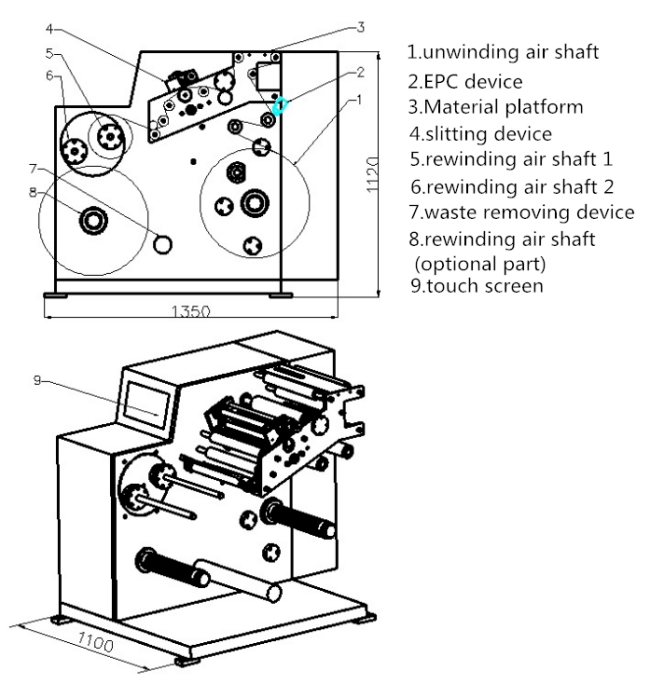
A paper roll slitting machine operates on a continuous web principle. It unwinds a master roll, passes the material through a dedicated slitting section, and rewinds the separated strips onto multiple narrower cores. You rely on this continuous motion to maintain high throughput. The slitting section utilizes shear, razor, or score blades depending on the material thickness and density. The mechanics require precise alignment of the unwind stand, the web guiding system, the slitting knives, and the rewind shafts.
You must differentiate between single-knife roll cutting and web slitting. A log cutter slices directly through a fully wound roll without unwinding it. This method works for specific tapes or textiles but fails to address web tension or caliper variations. In contrast, a dedicated paper slitting rewinding machine unwinds the material completely. It processes the web flat before rewinding, ensuring consistent density across all finished rolls. This unwinding and rewinding process is non-negotiable for paper products that require strict tension control.
Primary paper mills utilize a massive jumbo roll slitter to break down machine-width parent rolls into manageable sizes. These machines handle extreme weights and widths, often exceeding 100 inches. Secondary converting facilities use smaller, more precise machines to create final products. Primary use cases include flexible packaging, thermal receipt rolls, label stock, and web-fed printing preparation. These applications demand perfect edge profiles and precise roll densities to prevent downstream jamming.
The Mechanics of a Roll to Sheet Cutter
A roll-to-sheet cutter transforms continuous webs into flat, stacked sheets. The process begins with unwinding the parent roll. The web then passes through a decurling unit. This step flattens the material, removing the curl memory imparted by the roll. Next, the web enters the cross-cutting section, utilizing rotary or guillotine knives. Finally, the machine overlaps and stacks the output onto pallets. The synchronization of these stages determines the maximum operating speed.
High-capacity operations leverage multi-web sheeting capabilities. A robust paper cutting line can feed and cut multiple parent rolls simultaneously. This drastically scales throughput compared to single-web processing. You can process four, six, or even eight webs at once, multiplying your output volume without increasing machine speed. Managing tension across multiple webs simultaneously requires advanced braking systems on the unwind stands.
A complete sheeting line integrates several complex components. Layboys organize the cut sheets into neat stacks. Static eliminators prevent lightweight papers from clinging together. Automated palletizers remove finished stacks without halting production. Primary use cases include commercial printing, folding cartons, ream production, and specialty paper distribution. These industries require perfectly square, flat sheets ready for immediate downstream processing.
Technical Evaluation: Feature-to-Outcome Mapping
Web Handling, Core Winding, and Tension Control
Tension control dictates the success of any web-fed operation. A paper slitting rewinding machine requires sophisticated closed-loop tension control systems. These systems utilize load cells and dancer rollers to monitor and adjust web tension in real-time. Proper tension prevents telescoping, starring, and web breaks. You need consistent tension to build a stable, high-quality finished roll. If the tension is too high, the paper stretches or breaks. If it is too low, the roll becomes soft and unstable.
Core and shaft management directly impacts rewinding quality. An automatic slitter rewinder often employs differential rewind shafts. These shafts compensate for caliper variations across the web width. They allow individual rolls to slip slightly, ensuring uniform density across all rewound rolls. Standard unwind shafts on a sheeter do not require this slipping capability, as they only manage the master roll tension. Differential shafts use friction rings that expand pneumatically to grip the cores.
Sheeter tension requirements differ significantly. Tension remains primarily critical before the cutting head. You must maintain precise tension to ensure sheet length accuracy. Once the knife severs the sheet, tension drops to zero. The delivery system then relies on belts and vacuum to control the loose sheet. This fundamental difference in tension management defines the mechanical architecture of both machine types.
Tension Control Comparison
Feature
Slitter Rewinder
Roll-to-Sheet Cutter
Primary Tension Zone
Unwind to Rewind (Continuous)
Unwind to Cutting Head
Shaft Technology
Differential Friction Shafts
Standard Pneumatic Expanding Shafts
Post-Cut Control
Closed-loop rewind tension
Vacuum belts and overlap carriages
Defect Prevention
Prevents telescoping and starring
Ensures cut length accuracy
Cutting Mechanisms, Substrate Versatility, and Edge Quality
Slitting methods vary based on the substrate. Rotary shear cutting provides the cleanest edge for heavy paper and board. It uses two rotating circular blades acting like scissors. Razor cutting works best for thin films and lightweight papers. It drags a stationary blade through the moving web. Crush or score cutting presses a dull blade against a hardened anvil cylinder, separating the material through pressure. Selecting the wrong blade type ruins the edge profile and generates excessive dust.
Sheeting methods focus on the cross-cut. Synchronous dual rotary knives offer the cleanest cut and highest speeds. They reduce dust generation significantly compared to older technologies. Single rotary or dead-knife systems use one moving blade cutting against a stationary anvil. These systems generate more dust and limit maximum operating speeds. Dual rotary knives maintain a constant cutting speed that matches the web speed, preventing material bunching.
Different paper grades present unique challenges. Uncoated kraft paper generates substantial dust during cutting. Clay-coated papers dull blades quickly. Pressure-sensitive laminates can leave adhesive residue on cutting tools. Each machine type must manage blade wear and dust extraction effectively. High-quality converting lines incorporate dedicated vacuum systems to remove dust directly from the cutting zone. Failure to extract dust leads to contamination in downstream printing processes.
Output Management and Automation
Modern converting equipment relies heavily on automation. An automatic slitter rewinder features automated knife positioning. This eliminates manual measurement errors and drastically reduces changeover times. Laser core alignment systems guide operators during setup. Automatic roll pushers and unloading trees handle heavy finished rolls, reducing operator fatigue and increasing safety. Automation shifts the operator's role from manual labor to process monitoring.
Roll-to-sheet cutters often incorporate inline slitting. They use slitting knives to cut the web into multiple lanes prior to cross-cutting. This hybrid solution allows you to produce smaller sheet sizes from a wide parent roll. You maximize the parent roll yield while meeting specific customer size requirements. The inline slitters must be positioned accurately to ensure squareness of the final sheets.
Sheeter output features focus on continuous operation. Automatic reject gates divert spliced or defective sheets without stopping the machine. Static elimination systems ensure smooth stacking at high speeds. Continuous pallet discharge systems allow operators to remove full pallets while the machine continues stacking on a temporary platform. These features maximize uptime and overall equipment effectiveness.
Production Success Criteria & Downstream Compatibility
When to Specify Roll-to-Roll Processing
You should specify roll-to-roll processing when downstream equipment requires a continuous web feed. Flexographic presses, form-fill-seal packaging machines, and corrugators all rely on continuous rolls. A paper roll converter ensures these downstream machines operate at peak efficiency without frequent stops for material loading. The integrity of the rewound roll directly impacts the runnability of the next machine in the line.
High-speed, high-volume runs benefit immensely from roll processing. You minimize splice frequency by providing large, continuous rolls. Every splice introduces a potential failure point and requires downstream machine adjustments. Roll-to-roll processing keeps your high-speed lines running smoothly. You must calculate the maximum roll diameter your downstream equipment can handle to optimize the slitting output.
Certain products demand tight tolerances on roll edge profile and specific rewind density. Thermal receipt rolls and label stock require perfect edges to prevent jamming in consumer printers. A dedicated slitter rewinder provides the precise control necessary to meet these exacting specifications. The tension profile must be tapered, winding tighter at the core and slightly looser at the outer diameter to prevent starring.
When to Specify Roll-to-Sheet Processing
Specify roll-to-sheet processing when your downstream equipment is sheet-fed. Offset lithography presses, flatbed die-cutters, and folder-gluers require flat, square sheets. Sheeting in-house allows you to control the exact sheet size, reducing trim waste on the printing press. You eliminate the need to purchase pre-sheeted material, which often carries a premium markup.
End-products requiring immediate packaging into reams or boxes necessitate sheeting. Copy paper, art paper, and specialty cardstock move directly from the sheeter to the packaging line. This eliminates intermediate handling and speeds up order fulfillment. The sheeter must be equipped with precise counting and ream-marking systems to facilitate automated packaging.
When you need to process multiple webs simultaneously, a sheeter provides unmatched volume. Running four or six rolls at once multiplies your output. This approach suits high-volume commercial printing operations where sheet consumption outpaces single-web cutting capabilities. You must ensure the paper grades are compatible when running multiple webs to prevent cutting defects.
Operational Trade-Offs
Floor Space and Facility Requirements
Facility layout dictates equipment selection. Slitters require a relatively compact footprint. They need space for the unwind stand and the rewind section. The web travel path remains short and contained. You can often fit a high-capacity slitter into a constrained production area. You must leave adequate space around the machine for roll handling equipment, such as overhead cranes or forklift access.
Sheeters demand extensive linear space. The web must travel through the unwind, decurler, cutting head, delivery belts, and stacking layboy. High-speed sheeters require long delivery sections to slow the sheets down before stacking. You must allocate significant floor space to accommodate this linear workflow. The stacking area also requires space for staging empty pallets and removing finished stacks.
Structural requirements also differ. Both machines require adequate floor load-bearing capacity for heavy jumbo rolls. High-speed cutting heads on sheeters generate significant vibration. You may need specialized vibration isolation foundations to prevent this energy from affecting nearby precision equipment. Slitters generate less vibration but require robust anchoring to handle the torque of rapid acceleration and deceleration.
Setup Times, Changeovers, and Yield Loss
Setup times impact your daily throughput. Manual knife positioning on an older slitter consumes valuable production time. Operators must measure and lock each blade individually. Programmable slitting machines automate this process, reducing changeovers from hours to minutes. You regain lost production time with every job change. Automated systems also reduce the risk of operator injury during blade handling.
Waste factors differ fundamentally between the two processes. Slitting generates continuous edge trim waste. You must extract and bale this trim efficiently. Sheeting generates trim waste plus out-of-square or incorrect length rejects. Managing sheet waste requires different handling systems, often involving under-floor conveyors or manual collection bins. You must account for these waste streams when designing the facility layout.
Analyze parent roll width against required finished sizes.
Calculate edge trim percentage for both slitting and sheeting options.
Determine the frequency of size changeovers per shift.
Evaluate the capacity of your current waste extraction systems.
Maintenance and Consumables
Ongoing maintenance keeps your equipment running reliably. Slitter maintenance focuses on the cutting tools and tension systems. You must regularly sharpen or replace slitter blades to maintain edge quality. Friction rings and differential shafts require periodic cleaning and replacement to ensure accurate rewind tension. Brake pads on the unwind stand wear down and need regular inspection. Dust buildup in the tension sensors causes erratic behavior and must be blown out daily.
Sheeter maintenance centers on the cross-cut knife and delivery systems. Rotary knife sharpening requires specialized grinding equipment and precise installation. Decurler rollers need maintenance to ensure they effectively remove web memory. The complex network of conveyor belts in the delivery section requires tracking adjustments and eventual replacement. Vacuum systems must be cleaned to maintain adequate suction on the delivery belts.
Both machines require robust preventative maintenance schedules. Neglecting blade sharpness leads to poor product quality and increased dust generation. Ignoring tension system maintenance results in web breaks and rejected rolls. You must allocate sufficient resources to keep these primary breakdown machines in peak condition. Establish a daily, weekly, and monthly checklist for operators and maintenance technicians.
Implementation Realities and Risk Mitigation
Operator Training and Safety Compliance
Converting equipment presents significant safety hazards. You must prioritize operator training and machine guarding. Both machine types feature severe nip points where rollers meet. High-speed rotating shafts pose entanglement risks. Blade handling during setup and maintenance requires strict safety protocols and cut-resistant personal protective equipment. Never allow operators to bypass safety interlocks to clear jams.
Modern machines incorporate extensive safety features. Light curtains guard access to moving parts during operation. Interlocked safety doors prevent the machine from running when open. Emergency stop buttons must be easily accessible from all operator stations. You must ensure these safety systems remain functional and are tested regularly. Lockout/tagout procedures are mandatory during all maintenance activities.
Comprehensive training programs mitigate operational risks. Operators must understand web tension dynamics, knife setup procedures, and safe material handling techniques. Investing in thorough training reduces accidents, minimizes machine damage, and ensures consistent product quality. Document all training and require operators to demonstrate proficiency before running the equipment independently.
Conclusion
Selecting the right converting equipment defines your production capabilities. Evaluate your downstream processes to determine if continuous webs or flat sheets best serve your workflow. Assess your facility space and structural capacity before committing to a large linear sheeting line. Prioritize automation features like automated knife positioning to reduce changeover times and minimize operator errors. Implement strict preventative maintenance schedules to maximize uptime and preserve cut quality. Finally, invest heavily in operator training to ensure safe, efficient, and profitable converting operations.
Audit your downstream equipment to confirm whether roll-fed or sheet-fed material is required.
Measure your available floor space and verify floor load-bearing capacity for heavy machinery.
Calculate your average job run lengths to determine the ROI of automated knife positioning systems.
Establish a strict preventative maintenance schedule focusing on blade sharpening and tension control calibration.
FAQ
Q: What is the main difference between a slitter and a sheeter?
A: A slitter unwinds a wide roll, cuts it into narrower continuous strips, and rewinds them into smaller rolls. A sheeter unwinds a roll, flattens it, and cuts it horizontally to produce stacks of individual flat sheets.
Q: Can a paper roll slitting machine handle different material thicknesses?
A: Yes. Advanced slitting machines utilize differential rewind shafts and adjustable tension control systems to manage varying material thicknesses and caliper inconsistencies across the web width.
Q: Why is decurling necessary in roll-to-sheet cutting?
A: Paper stored in a roll develops a curved memory. A decurling unit bends the web in the opposite direction over a small radius bar or roller to flatten the material before it is cut into sheets.
Q: How does automated knife positioning improve production?
A: Automated knife positioning uses motorized systems to set blade widths based on programmed recipes. This eliminates manual measurement, drastically reduces setup time, and increases overall machine uptime.
Q: What type of slitting blade is best for thick paperboard?
A: Rotary shear cutting is the best method for thick paperboard. It uses two overlapping circular blades that act like scissors, providing a clean, dust-free cut on heavy materials.
Q: How do multi-web sheeters increase throughput?
A: Multi-web sheeters feed several parent rolls into the cutting head simultaneously. This allows the machine to cut multiple sheets with a single rotation of the knife, multiplying output volume.



)