The converting industry is rapidly shifting toward shorter production runs and tighter facility floor spaces. Manufacturers face increasing pressure to maintain high output. They must achieve this without expanding their physical footprint. Massive, legacy machines often struggle to adapt to frequent job changes. This inflexibility wastes valuable production hours.
A slitting machine designed in a compact, automatic format offers the ideal remedy. We define this equipment as a highly automated system. It converts wide master rolls of substrates into narrower, usable rolls. It performs this complex task requiring minimal human intervention. Functionally, it sits precisely within the broader converting line. You will often see it acting as an indispensable secondary slitter. Many facilities also deploy it as a downstream companion to auto die-cutting machines.
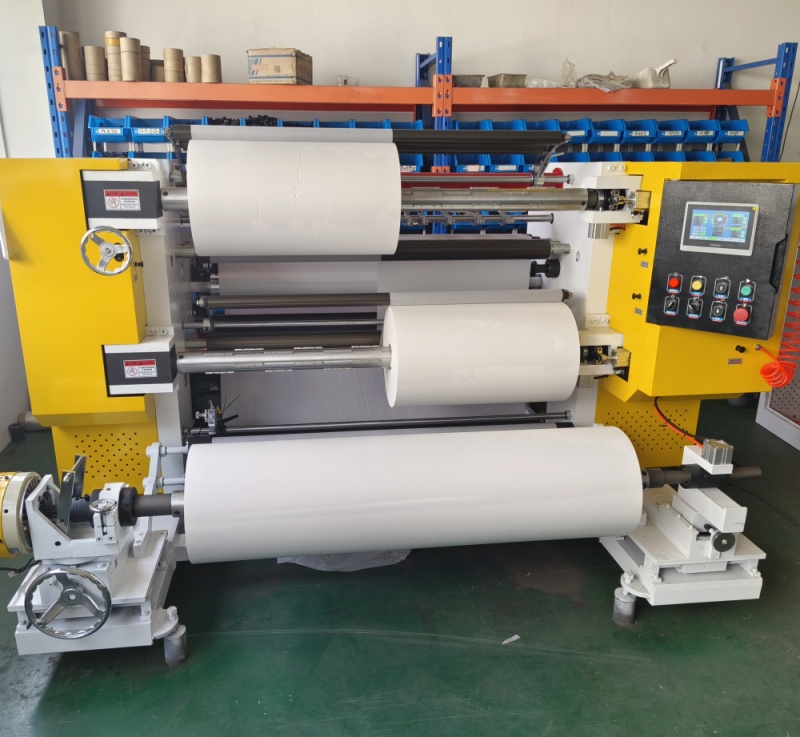
In this comprehensive guide, you will learn how these agile machines handle complex substrates. We will explore their specific engineering mechanisms and automation features. You will also discover the exact evaluation criteria needed to shortlist the best equipment for your production floor.
Key Takeaways
Efficiency over Footprint: Compact slitting machines deliver industrial-grade tension control and automation without requiring massive floor space.
Skill-Level Agnostic: Modern PLC and digital knife-positioning significantly reduce the reliance on highly trained operators.
Material Versatility: Properly equipped machines handle diverse substrates, from standard paper to high-tack BOPP films, using specialized cooling and tension systems.
ROI Drivers: Evaluation should prioritize changeover speed, cutting accuracy (industry standard ±0.15mm), and waste reduction over raw top speed.
The Architecture of a Small Size Automatic Slitting Machine
The unwinding process sets the critical foundation for flawless roll converting. Manufacturers commonly integrate highly responsive photoelectric edge-guiding systems here. These intelligent sensors detect material edges instantly. They correct web wander before the substrate reaches the cutting zone. This proactive guidance prevents telescoping rolls entirely. It also stops harmful dust accumulation on the factory floor.
Slitting mechanisms form the mechanical heart of the operation. You will generally encounter three standard industry configurations. Each serves a distinct purpose based on the substrate material.
Razor Knife Setups: These excel when cutting thin, stretchable plastic films. They provide a clean slice through polymers.
Shear Knife Setups: These utilize a scissor-like cutting action. They work best for paper, laminates, and metallic foils.
Round Knife Setups: Engineers deploy these for thicker, highly rigid substrates requiring heavy downward pressure.
Automated rewinding control dictates your final roll quality. Modern units abandon mechanical clutches. Instead, they use programmable logic controller (PLC) touch screens. These controllers connect directly to advanced AC Vector Drives. Together, they create a closed-loop automatic tension system. As the roll diameter grows during processing, the system adjusts tension automatically. This prevents operators from crushing the inner core or stretching the web.
Material mechanics naturally differ based on the core substrate. Consider a dedicated Automatic paper roll slitting machine. It relies heavily on sturdy shear blades and powerful dust extraction vacuums. In sharp contrast, an Automatic plastic film slitting machine prioritizes heavy static elimination. It uses razor configurations to cleanly slice stretchable polymers without causing edge distortion.
Engineering Solutions for Complex Materials
Complex materials constantly challenge standard converting machinery. High-tack adhesives remain notoriously difficult to process. Glue easily sticks to standard exposed blades. This causes friction, excessive heat, and eventual blade stalling. A specialized BOPP Plastic Roll To Roll Slitting Machine solves this frustrating issue. It utilizes innovative silicone solution cooling systems. The liquid coats the blade edges continuously during operation. It prevents adhesive accumulation entirely. Your operators avoid machine jams and constant blade cleaning.
Uneven material thickness presents another major production hurdle. Many packaging films and sensitive foils vary slightly in profile. Standard rewinding shafts struggle under these conditions. They create uneven tension across the web width. The engineering solution relies on differential friction rings. You install these specialized rings directly onto the rewind shafts. The rings slip independently based on localized web tension. They compensate for thickness variations automatically. This ensures flat edges and uniform tension across all finished rolls.
Precision mechanics guarantee a highly smooth cross-section on the finished product. Premium machines abandon basic chain drives. Instead, servo motors provide exact torque control. Ball screws drive the knife assemblies across the web precisely. Many advanced systems allow real-time blade angle adjustments during operation. These mechanical elements work harmoniously. They ensure every single cut meets strict industrial tolerances.
Material Challenge | Engineering Solution | Production Benefit |
High-Tack Adhesives (BOPP, Tapes) | Silicone solution cooling systems | Prevents blade stalling and glue build-up |
Uneven Film Thickness | Differential friction rings on rewind shafts | Maintains uniform tension and flat roll edges |
Rough or Jagged Cut Edges | Servo motors & ball screw knife positioning | Delivers highly smooth, exact cross-sections |
Web Wandering | Photoelectric edge-guiding systems | Eliminates telescoping and waste |
The Business Case for Downsizing Your Slitting Footprint
Facility floor space holds immense value in modern manufacturing. You must maximize your floor space utilization strictly. Traditional heavy-duty slitters require massive square footage. They are incredibly heavy, entirely rigid, and completely immovable. Contrast this massive footprint against a modern Small Slitting Rewinding Machine. These compact units often weigh around 55kg. They comfortably handle standard web widths ranging from 230mm to 500mm. You can install them virtually anywhere on your floor. You free up valuable real estate for other revenue-generating equipment.
The short-run advantage provides a compelling argument for downsizing. Consumer demands drive fragmented, highly variable jobs today. A massive primary slitter wastes immense time on small orders. Setup often takes longer than the actual run. Instead, you can deploy a small roll label slitter machine. It acts as the ultimate agile solution for variable digital print orders. It spins up rapidly. Changeovers take mere minutes rather than hours.
Labor constraints heavily affect modern equipment choices. Finding highly trained operators remains an ongoing industry struggle. Compact automated machines naturally help mitigate these labor shortages. They feature fully enclosed safety guards. These physically protect your workers from moving blades. Simplified touch-panel operations replace complex manual levers. You dramatically lower the barrier to entry for new operators. This effectively de-risks your production floor while accelerating the onboarding process.
Industrial 4.0 & Automated Changeovers
Automated changeovers completely redefine modern converting workflows. Digital knife positioning replaces tedious manual measurements. Historically, operators spent hours physically aligning blades using rulers. Now, smart technology distributes blades automatically based on digital inputs.
The standard automated setup workflow follows a strict, highly efficient sequence:
The machine operator scans a job barcode attached to the master roll.
The central PLC reads the required slit widths instantly.
The system commands the automated digital knife box to deploy.
The machine auto-positions 4 knives accurately in under 20 seconds.
Recipe management further streamlines daily production schedules. PC-based recipe storage remembers thousands of exact job parameters. Operators simply select the job number on the screen. The machine adjusts tension limits, run speed, and blade depth instantly. Leading systems also offer deep ERP connectivity. They pull specific order data straight from your corporate office network. This eliminates manual data entry errors entirely.
Data yields vastly improve your factory management capabilities. The equipment captures real-time speed metrics and running meters accurately. It also logs precise downtime data. You can track exactly how the machine performs shift after shift. This process isolates mechanical performance from individual operator skill levels. You gain objective, irrefutable insights into your daily production yields.
Evaluation Criteria: Shortlisting Your Next Slitting Machine
Shortlisting your next converting equipment requires strict, methodical evaluation. Do not simply focus on maximum theoretical speeds. You must contrast raw speed claims against your specific application realities. Baseline processing speeds usually sit around 80-100 m/min. This slower pace is perfect for highly sensitive materials. However, theoretical limits of high-end compact duplex slitters can reach up to 750 m/min. Always match the running speed to your substrate limits to avoid material breakage.
Accuracy benchmarks matter deeply for quality control. Establish ±0.15mm as the strict baseline for standard converting applications. This ensures clean, highly usable rolls for downstream processing. If you serve premium medical or electronics markets, demand ±0.1mm accuracy. Do not accept anything less from the vendor.
Use-case alignment prevents costly procurement mistakes. You must meticulously match the machine type to your core material. For example, ensure an Automatic Paper Slitting Rewinding Machine possesses the correct shear-cut blades. Abrasive paper dulls incorrect razor blades rapidly. Film slitters, conversely, must prioritize sharp razor cuts and incorporate differential friction rings. Purchasing the wrong configuration leads to massive material waste.
Vendor support ultimately secures your long-term investment. Look for completely transparent global installation support. Verify their engineering dispatch capabilities before signing contracts. Review their spare-part replacement terms carefully. A standard 1-year limited warranty should serve as your absolute baseline expectation. Ensure they offer rapid remote diagnostic support to minimize costly downtime.
Conclusion
A small size automatic slitting machine represents a targeted solution for modern, agile manufacturing environments. It is never a compromise on industrial quality. By integrating advanced PLC controls, digital knife positioning, and robust safety features, these compact systems solve pressing space and labor constraints. They empower your facility to handle short-run jobs profitably. They also seamlessly process complex materials like high-tack BOPP films and uneven foils without sacrificing accuracy.
To successfully integrate this technology into your workflow, follow these practical next steps:
Audit your current job changeover times to identify the exact hours lost to manual blade adjustments.
Calculate your average required roll widths to ensure a compact machine fits your specific order profile.
Demand that prospective vendors run live material test samples using your actual substrates before finalizing procurement.
Confirm your facility meets the basic utility requirements for automated systems, such as stable pneumatic air supply and compatible electrical voltage.
FAQ
Q: What is the typical tension accuracy of a compact slitting machine?
A: Modern compact machines achieve highly precise tension accuracy through closed-loop load cell systems. These sensors continuously monitor the web. They feed real-time data back to the AC vector drives. This allows the machine to maintain variable tension profiles perfectly, adjusting automatically as the rewind roll diameter increases.
Q: Can a small roll slitter handle sticky or adhesive materials?
A: Yes, it absolutely can. However, you must equip the machine correctly. Handling adhesive tapes requires specialized blade coatings. You also need a continuous silicone solution cooling system. This liquid prevents the glue from accumulating on the blades, eliminating stalls and ensuring smooth continuous cuts.
Q: What is the difference between a rewinder and a slitting rewinding machine?
A: A standard rewinder simply transfers material from one master roll to another to correct tension or alter roll direction. A slitting rewinding machine actively divides that master roll into multiple narrower strips during the exact same rewinding process, using specialized cutting mechanisms.
Q: Does a small size slitting machine require specialized power or pneumatics?
A: These machines usually operate on standard industrial utility feeds. You will generally need a clean, stable air supply delivering 0.6–0.8MPa of air pressure to operate the pneumatic knife engagements. Electrical requirements vary by region, so always specify your local three-phase voltage standards during the vendor consultation.


)