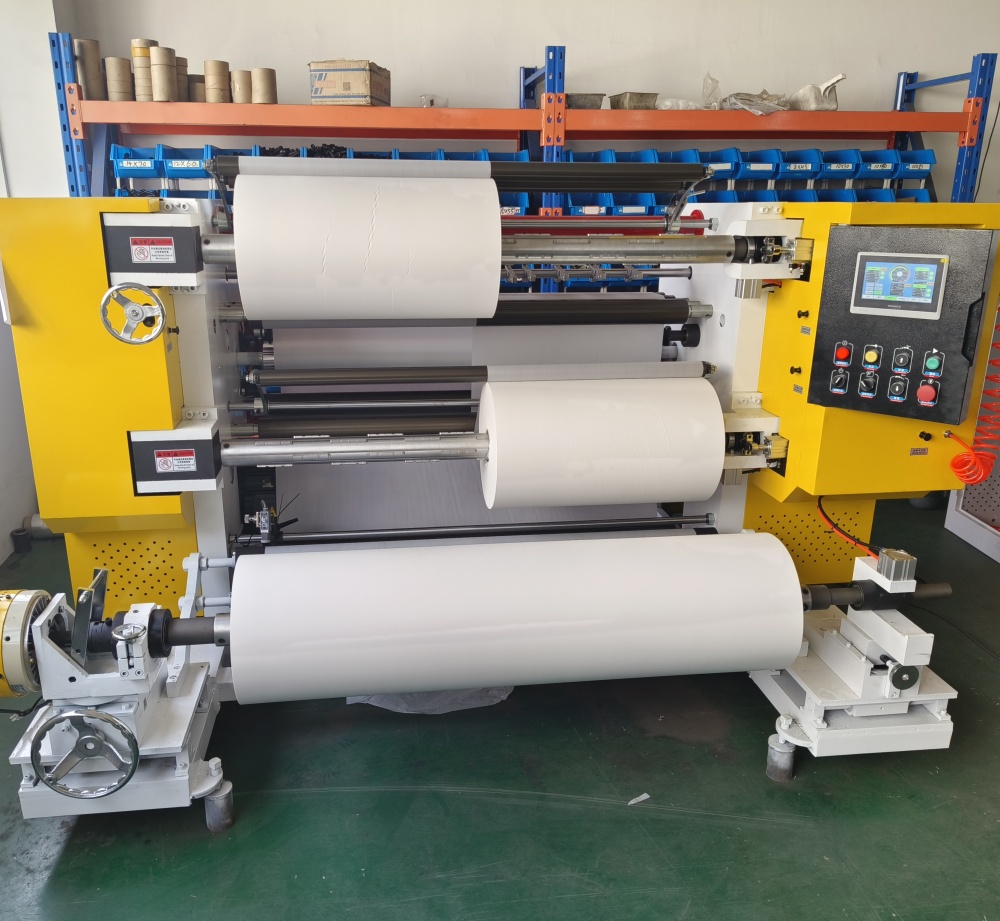
Processing thick, high-yield-strength coil materials presents a massive operational challenge. Historically, this demanding task requires immense, capital-intensive lines equipped by deep looping pits. Many facilities simply lack the floorspace or infrastructure necessary for such colossal setups. Enter the small size automatic thick coil Slitting Machine. This compact powerhouse serves as a scaled-down, high-tension alternative. It specifically targets facilities facing strict footprint constraints but demanding heavy-gauge output.
In this comprehensive guide, we break down the fundamental engineering principles making this equipment effective. You will discover its surprising material versatility. We explore applications ranging from heavy metal coils to dense industrial films. Finally, we outline the exact technical evaluation criteria you need. This guide ensures you can confidently make an informed procurement decision tailored directly to your production goals.
Key Takeaways
- Architecture: Compact thick-coil slitters rely on reinforced uncoilers, specialized knife penetration ratios, and high-torque recoilers to handle heavy-gauge materials without traditional large-scale looping pits.
- Precision vs. Footprint: Advanced models maintain a ±0.1 mm width tolerance and utilize vacuum-hardened tooling despite the reduced machine footprint.
- Versatility: While built for metal, the foundational tension-control technology is highly adaptable to non-metal sectors, mirroring the mechanics of an automatic paper roll slitting machine or an automatic plastic film slitting machine.
- ROI Drivers: Automation features (touchscreen control, programmable widths, automated scrap handling) mitigate the labor costs and downtime associated with manual changeovers.
1. Defining the Compact Heavy-Gauge Slitting Machine (Core Mechanics)
Understanding a compact thick-coil line requires looking closely at its foundational engineering. Engineers design these systems to manipulate immense physical forces within a heavily restricted footprint. They achieve this through a highly optimized three-step processing sequence.
The Core Three-Step Process
- Uncoiling: Expanding mandrels grip the inner diameter of heavy coils firmly. They feed material downstream while applying strict, controlled back-tension. This tension prevents the heavy parent roll from unwinding prematurely.
- Slitting (The Physics of Thickness): Material hardness directly dictates knife penetration. Softer, thicker materials require deeper blade penetration for a clean fracture. Conversely, harder metals require less penetration but exponentially higher shear force to snap the web cleanly.
- Recoiling: The system rewinds slit strips evenly. This stage requires robust tension separation units. Heavy-duty separator discs prevent telescope-winding, ensuring tight, uniform output coils even in the thickest materials.
The "Small Size" Distinction
In the material processing sector, the 2mm thickness mark usually dictates equipment architecture. Standard medium-to-heavy lines operating above 2mm typically require massive straighteners and deep looping pits. A compact machine breaks this conventional rule. It relies on optimized loop slit tensioning and heavy-duty braking pads. These internal mechanisms manage gauge variations—often called material crown—within a highly restricted floor space. You get mill-scale shear power without excavating a twenty-foot pit in your facility.
2. Material Compatibility: Cross-Industry Applications
We often associate heavy-duty coil processing exclusively with the steel industry. However, the tension-management technology translating massive torque into clean cuts is surprisingly versatile. It spans multiple industrial sectors.
Metal Applications (The Primary Use Case)
Manufacturers primarily build these rugged frames for carbon steel, stainless steel, and galvanized coils. In these environments, the thickness-to-width ratios demand extreme high torque rather than just blistering high speed. Heavy metal coils punish weak arbors. Therefore, compact units utilize oversized bearings and reinforced chassis elements to prevent blade deflection under heavy loads.
Adaptability for Non-Metal Industrial Substrates
The core tension controls governing thick steel easily translate into handling dense non-metal substrates.
- Paper & Labeling: Heavy-duty torque control effectively mirrors the mechanics found in an Automatic paper roll slitting machine. When processing thick, dense kraft paper or heavy cardboard, maintaining uniform edge precision prevents catastrophic web tearing. These same rigid tension capabilities allow a heavy frame to function as a highly stable Small roll label slitter machine. In multi-layer adhesive scenarios, operators can recalibrate the blade pressure. This turns the unit into a rugged Automatic Paper Slitting Rewinding Machine.
- Plastics & Polymers: Facilities leverage the exact same heavy-duty tension isolation units for industrial-grade polymers. You can effectively utilize this chassis as an Automatic plastic film slitting machine. Processing thick, rigid extrusion rolls demands immense braking force. Rigid braking prevents stretching. Consequently, you can configure the line as a heavy-duty BOPP Plastic Roll To Roll Slitting Machine to slice thick plastic membranes flawlessly.
The Universal Principle
Whether you operate as a metal processor cutting stainless strips or configure the equipment as a versatile Small Slitting Rewinding Machine, the defining trait remains constant. The machine's true value lies in its ability to maintain uniform, unyielding web tension across uncooperative, thick substrates.
3. Evaluation Criteria: Sizing Up Performance & Automation Metrics
Selecting the right compact heavy-gauge line requires analyzing very specific technical benchmarks. You cannot evaluate a thick-coil unit using the exact same metrics applied to light-duty, high-speed machines.
Production Speed vs. Material Thickness
You must establish realistic speed benchmarks. Light-gauge high-speed lines frequently reach 150–300 m/min. However, thick coil processing strictly prioritizes torque and slit quality over pure velocity. Attempting to force heavy-gauge material through a compact frame at 200 m/min guarantees severe material deformation and premature blade wear. Optimizing at specific, controlled speeds (often 30-80 m/min) prevents equipment damage while ensuring premium edge quality.
Slit Quality and Tolerance Standards
You should demand strict specifications regarding arbor rigidity. Blade quality also heavily influences the final product. Expert operators recommend specifying vacuum-quenched blades to consistently minimize edge burrs. As a benchmark expectation, reliable compact equipment should consistently hold a width tolerance of ±0.1 mm, even under heavy load.
Automation and Changeover Efficiency
Evaluate tooling changeover systems carefully. Space constraints dictate how easily operators can swap blade configurations. Advanced machines incorporate programmable width settings alongside shimless tooling calculators. These software upgrades dramatically reduce operator error and minimize expensive downtime.
Tooling Changeover System Comparison Chart
| System Type | Space Requirement | Changeover Speed | Best Application |
| Removable-Head | Low (requires external crane) | Slow (30-45 mins) | Budget-focused tight spaces |
| Injector-Head | Medium (side track needed) | Fast (2-5 mins) | High-mix production runs |
| Turret-Head | High (rotating base needed) | Ultra-Fast (<2 mins) | Maximum automation facilities |
4. Implementation Realities: Scrap Handling and Tension Management
Moving beyond basic parameters, practical implementation often uncovers hidden spatial challenges. Handling thick edge trim and managing high tension in short distances require clever engineering workarounds.
Managing Edge Trim Scrap in Limited Space
Scrap processing complexity scales rapidly alongside material thickness. Assess the vendor solutions thoroughly before purchasing. Scrap ballers work perfectly for lighter gauges, winding ribbons into neat bundles. Scrap winders offer a solid middle ground for medium thicknesses. However, scrap choppers remain absolutely mandatory for heavy or thick scrap. Thick trim cannot be safely wound. Choppers slice the rigid trim into small, easily transportable pieces, directing them down a chute into a collection bin.
Tensioning Without Deep Looping Pits
Traditional engineering relies on the mathematical reality of pit depth. Formulas dictating pit depth relate directly to Outer Diameters, Inner Diameters, and material thickness variations. When a facility cannot dig a pit, small-size automatic machines compensate ingeniously. They deploy advanced drag tensioners and specialized felt or rubber stripping rings. These machines often utilize tight-line operating modes. In a tight-line setup, the recoiler physically pulls the material directly against the uncoiler's braking resistance, bypassing the need for an accumulation loop entirely.
5. Vendor Shortlisting Logic & Maintenance Realities
Procuring a massive industrial asset demands careful supplier scrutiny. Beyond basic machine specs, you must evaluate the manufacturer’s engineering authority and the realistic maintenance demands of the equipment.
Evaluating Vendor Engineering Authority
Look strictly for manufacturers who provide verifiable case studies. They should prove their claims regarding torque-to-footprint ratios. A compact frame vibrating excessively under load indicates poor structural engineering. Assess their after-sales support networks carefully. Ensure they guarantee availability for specialized tooling. Additionally, ask about control system software updates. Modern machinery relies heavily on PLC logic; outdated software causes just as much downtime as broken hardware.
Maintenance Realities for Compact Heavy-Duty Lines
Do not underestimate the physical demands placed on these machines. High physical stress confined inside a remarkably small footprint mandates strict maintenance schedules. You must enforce clear operational protocols on the factory floor. Mandate daily blade inspection routines. Drive-train lubrication must happen precisely on schedule. Furthermore, mandate regular calibration of the automatic tension controllers. Strict adherence to these maintenance realities extends the equipment lifecycle significantly and maintains flawless cutting integrity.
Conclusion
A small size automatic thick coil slitting machine strategically bridges the gap between light-duty rewinding and massive mill-scale processing. It delivers heavy-duty shear force without demanding heavy-duty facility renovations. By leveraging advanced tension isolation and automated tooling, these units empower smaller manufacturers to process robust materials in-house.
As a next step, we strongly recommend mapping out your exact parameters. Document your maximum material thickness, maximum coil weight, and absolute floorspace constraints. Once you define these boundaries, initiate technical audits with shortlisted manufacturers to find the precise frame capable of meeting your production goals.
FAQ
Q: What is the ideal production speed for a compact thick coil slitting machine?
A: Speed is inversely proportional to thickness. For thick coils, avoid pushing maximum speeds. Focus on sustainable operational speeds (typically 30–80 m/min). This lower velocity maintains a precise ±0.1 mm tolerance and prevents extreme stress on the compact machine frame.
Q: Are automated tooling features worth the premium on a small machine?
A: Yes. Automated tooling directly justifies its premium by reducing labor dependencies. It enhances operator safety by eliminating the manual handling of heavy arbors. Faster changeovers significantly increase machine uptime, especially in multi-shift operations producing varying strip widths.
Q: Can a machine designed for thick metal coils process heavy-duty paper or plastics?
A: Absolutely. With appropriate blade tooling and precise tension recalibration, these robust frames transition smoothly. They operate as highly stable automatic paper or plastic film slitters, easily handling thick, rigid non-metal substrates without web tearing or edge distortion.
Q: How is edge trim scrap handled if I don't have space for large scrap winders?
A: We recommend utilizing integrated scrap choppers. Instead of winding thick, dangerous edge ribbons, choppers slice the heavy edge trim into small pieces. This scrap then falls directly into a compact collection bin, perfectly suiting tight facility layouts.


)