In today’s converting industry, choosing a slitting machine is about much more than simply cutting a wide roll into narrower ones. As materials become more complex and production demands grow higher, the right machine must deliver stability, accuracy, repeatability, and long-term efficiency in daily operation. From our perspective, factors like model size, speed, and price are only part of the decision. What matters more is whether the machine truly matches the material, production workflow, operator needs, and finished roll requirements, because a well-matched slitting machine can improve output, reduce waste, shorten changeover time, and keep the whole line running more smoothly.
Why Choosing the Right Slitting Machine Matters More Today
The production environment for roll materials has changed significantly. Many companies now process thinner films, more delicate laminates, coated materials, adhesive products, specialty papers, and functional materials that are more sensitive to tension, surface marking, and rewinding defects. At the same time, production cycles are often shorter, order variation is greater, and customers expect tighter quality control.
Because of this, the slitting machine has become a more strategic piece of equipment. It affects not only the cutting stage itself, but also the value of the material entering downstream printing, laminating, packing, or end-use application. If the machine creates unstable tension, inaccurate slit widths, poor edge quality, or uneven rewinding, the resulting problems can continue through the rest of production.
Slitting Quality Influences More Than the Final Cut
The visible task of a slitting machine is cutting, but the real impact is much broader. A machine that handles the web properly can improve roll stability, material protection, production flow, and downstream usability. A machine that is poorly matched to the application can create hidden costs that are not obvious at first purchase, such as repeated setup adjustments, extra operator intervention, waste, and customer complaints.
Today’s Requirements Are More Practical and More Demanding
In earlier periods, some users could accept a machine that worked reasonably well most of the time. Today, production often requires a higher level of control. Manufacturers want faster changeovers, more stable running, lower scrap, and better repeatability from order to order. That is why choosing the right slitting machine today requires a practical and detailed evaluation rather than a simple comparison of specifications.
Start With the Material, Not the Machine Catalog
When selecting a slitting machine, we believe the first question should not be “Which machine is the fastest?” but “What material are we really processing?” Material behavior determines much of what the machine must do well.
A slitting machine that performs strongly with thick paper may not be ideal for soft film. A machine designed for simple packaging rolls may not be suitable for high-value laminated material or coated products that mark easily. The right choice begins with understanding the material’s thickness range, surface condition, elasticity, structure, and sensitivity to tension.
Flexible Films Need Stability and Control
Thin plastic films and lightweight flexible materials often require very stable tension management and precise web guiding. If the machine applies uneven force, the material may stretch, wrinkle, or drift. In these cases, smooth unwind control and reliable rewind performance matter just as much as cutting accuracy.
Laminates and Specialty Materials Need Better Handling
Laminated structures and specialty materials can be more difficult because they combine layers with different properties. If the slitting process is unstable, layer movement, edge issues, or roll deformation can occur. This means the machine must support not only cutting, but also controlled material transport across the full web path.
Tension Control Should Be a Core Selection Factor
Among all the factors involved in choosing a slitting machine, tension control is one of the most important. Good tension control helps the web remain flat, stable, and predictable from unwind to rewind. Poor tension control leads to a wide range of production problems, including wrinkles, wandering, breakage, inconsistent roll hardness, and poor slit edge quality.
In our experience, many users only fully appreciate the importance of tension after they face repeated quality issues. But by then, the machine is already installed. It is much better to evaluate tension capability in advance and understand how the machine maintains balance during different stages of the process.
Stable Tension Supports Better Cut Quality
When the material stays stable in the slitting zone, the blades can work more consistently. This improves edge condition, slit width accuracy, and overall roll appearance. Stable tension also helps reduce the startup loss that often occurs when the web is not fully under control.
Tension Performance Affects Rewinding Too
The rewind section depends heavily on proper tension management. If tension is too high, the roll may become too hard or the material may deform. If tension is too low, the roll may be loose, telescoped, or poorly aligned. Choosing the right slitting machine means choosing one that can maintain control across the entire run, not just at the blade.
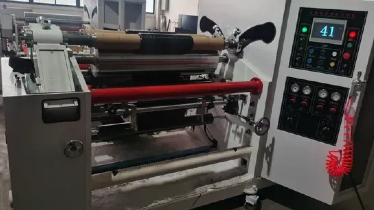
Cutting Method Must Match the Application
A slitting machine can use different cutting methods depending on the material and production goal. Choosing the wrong cutting method can reduce efficiency and create defects, even if the rest of the machine is well built.
Razor Slitting for Lightweight Webs
Razor slitting is often used for thinner films, adhesive materials, and certain soft substrates. It can be effective and efficient when the material is suitable. For the right jobs, it offers a relatively direct cutting approach and can support clean production.
Shear Slitting for Stronger Edge Control
Shear slitting is commonly used when stronger and more controlled cutting performance is needed. It is often preferred for paper, foil, laminates, and tougher flexible materials because it can produce cleaner edges and more consistent results.
Score Slitting for Specific Needs
Score slitting also has its place in some production settings. It may suit certain material types and operational preferences, but it should be chosen carefully based on actual application demands.
When evaluating a machine, it is important to think about whether the cutting setup truly fits current materials and whether it can also support future product expansion.
Machine Structure and Stability Matter in Daily Use
A slitting machine may look strong in a brochure, but actual production performance depends on structural stability. Frame rigidity, roller design, drive consistency, and overall mechanical quality all affect how smoothly the machine handles the web.
If vibration, misalignment, or uneven transport appears during running, cutting quality will suffer. That is why machine structure should not be treated as a secondary issue. A strong and stable machine helps maintain repeatability during long runs and supports better performance across different materials.
Ease of Operation Is a Real Productivity Factor
Some buyers focus heavily on machine mechanics but underestimate the value of operator experience. In real production, ease of operation can make a significant difference. A machine that is difficult to set up, adjust, or monitor may slow down production even if its technical design is good.
Operator-friendly controls, clear settings, easier knife adjustment, accessible maintenance points, and practical job parameter management all help increase daily efficiency. A machine that reduces trial and error allows operators to reach stable production faster and maintain it with less stress.
Faster Setup Reduces Lost Time
Many factories process multiple orders with different slit widths, materials, and rewind requirements. In these environments, faster setup is a major advantage. Even small improvements in changeover time can create meaningful productivity gains over weeks and months.
Simpler Monitoring Helps Prevent Bigger Problems
A slitting machine that allows operators to observe and adjust key conditions easily can prevent minor issues from becoming major interruptions. Clear operating logic supports more confident daily use and smoother team training.
Table: Key Factors in Choosing the Right Slitting Machine Today
Selection Factor | Why It Matters | Practical Benefit |
Material compatibility | Ensures the machine matches film, paper, foil, laminate, or specialty web behavior | More stable handling and fewer defects |
Tension control | Keeps the web balanced through unwind, slitting, and rewind | Better cut quality and improved roll consistency |
Slitting method | Matches the cutting system to the material and edge requirement | Cleaner edges and more reliable output |
Rewind performance | Builds finished rolls with proper hardness and alignment | Easier downstream use and storage |
Machine stability | Reduces vibration and running inconsistency | Better repeatability in daily production |
Ease of operation | Simplifies setup, adjustment, and troubleshooting | Faster changeovers and lower operator burden |
Future flexibility | Supports changing materials and job types | Better long-term equipment value |
Rewinding Quality Should Never Be Overlooked
When choosing a slitting machine, some people pay close attention to slit width accuracy but give less attention to the rewind section. In reality, rewind quality is one of the clearest indicators of whether the machine truly matches the application.
A finished roll must not only be the right width. It should also have neat edges, balanced hardness, and a stable structure for storage, transport, and downstream converting. Poor rewinding can reduce the value of otherwise acceptable material and create additional problems later.
Good Rolls Support the Next Process
Whether the next stage is printing, laminating, pouch making, or packaging, the quality of the rewound roll matters. Rolls that are loose, telescoped, or unevenly wound can create feeding instability and extra downtime in later operations. Choosing the right slitting machine helps protect performance beyond the slitting department itself.
How to Make a More Practical Selection Decision
Choosing the right slitting machine today means evaluating real production needs instead of idealized assumptions. We recommend looking closely at current materials, finished roll requirements, daily job changes, operator skill level, and future plans for product expansion. The goal is not to choose the most complex machine available, but the most suitable one for the actual work being done.
In many cases, the best decision comes from balancing several priorities: stable tension, appropriate cutting method, strong rewinding, reliable structure, and easy operation. A machine that supports these areas well is more likely to perform consistently in the real world.
Conclusion
Choosing the right slitting machine today requires a broader view than simple speed or price comparisons. Modern production demands better control, better repeatability, and better adaptation to different materials. The right machine helps maintain tension stability, improve edge quality, support cleaner rewinding, and reduce unnecessary waste across the whole converting process.
For manufacturers working with flexible materials, paper, foil, laminates, and other roll products, the slitting machine is not just a cutting tool. It is a key part of production quality and operating efficiency. In our view, equipment selection should be based on real material behavior, daily production needs, and long-term performance expectations. If you are reviewing your options and want more practical guidance on finding a suitable slitting solution, Longterm Machinery is worth contacting to learn more.
FAQ
Q: What should we focus on when choosing the right slitting machine today?
A: The main focus should be on material compatibility, tension control, slitting method, rewind quality, machine stability, and ease of operation rather than only speed or price.
Q: Why is tension control so important in a slitting machine?
A: Tension control is important because it keeps the web stable during processing, which helps improve cut accuracy, reduce wrinkles, and support better finished roll quality.
Q: How does the right slitting machine improve production efficiency?
A: The right slitting machine improves production efficiency by reducing waste, shortening setup time, minimizing operator correction, and producing more consistent rolls for downstream use.
Q: Does rewind quality matter when selecting a slitting machine?
A: Yes, rewind quality matters because finished rolls must remain neat, stable, and usable in storage, transport, and later converting processes.


)