Paper and film are both widely used roll materials in the converting industry, but they behave very differently during slitting. Paper usually needs strong edge control, stable web handling, and reliable rewinding to keep good roll shape and cut quality, while film is more sensitive to tension changes, stretching, wrinkling, and surface damage. Because of this, slitting machine solutions for paper and film must offer more than speed and basic cutting accuracy. In our view, the right slitting machine should match the material, maintain stable tension from unwind to rewind, ensure clean slit quality, and help operators run different jobs more confidently, leading to smoother production, lower waste, and more consistent finished rolls.
Why Paper and Film Need Different Slitting Approaches
Paper and film may both arrive in roll form, but their processing behavior is not the same. That is why a single slitting approach does not always work equally well for both.
Paper generally has more body and stiffness than film, but it can still create problems if the web path is unstable or the cutting setup is poorly adjusted. Dust, rough edges, and roll deformation may appear if the machine does not maintain proper control. Film presents another kind of challenge. It is often thinner, more elastic, and more vulnerable to tension fluctuation. Even a small problem in the web path can cause wrinkles, stretching, or uneven rewinding.
Paper Requires Edge Quality and Roll Structure
For many paper products, good slit edges and stable rewound rolls are essential. If the cut edge is rough or the roll winds unevenly, later production stages may slow down or reject the roll entirely. Slitting solutions for paper therefore need to emphasize cutting stability, strong rewind performance, and repeatable roll formation.
Film Requires Better Tension Sensitivity
Film is often far less forgiving than paper. It can react quickly to tension spikes, guide errors, or surface pressure. In these cases, the slitting machine must protect the material rather than force it through the process. Better tension regulation, smoother roller design, and controlled rewinding are especially important for film applications.
The Role of Tension Control in Slitting Machine Solutions
Tension control is one of the most important parts of any slitting machine solution for paper and film. Without stable tension, cutting quality, roll alignment, and rewind structure all become harder to manage.
When tension is too high, film may stretch and paper may deform or run unevenly. When tension is too low, the web may wrinkle, drift, or rewind loosely. Good tension control keeps the material balanced across the full machine path, allowing it to enter the slitting section in a stable condition and leave the rewind section as a properly formed roll.
Stable Tension Helps Paper Run Smoothly
In paper slitting, stable tension helps maintain a flatter web and supports more uniform cutting. It also improves rewind control so that finished rolls remain neat and usable. This is especially valuable for narrow-width jobs where small tracking errors can quickly affect quality.
Stable Tension Protects Film Quality
In film slitting, tension control is even more critical because film responds quickly to small changes. A machine with reliable tension regulation can help reduce web breaks, surface defects, and uneven roll hardness. This improves production confidence and reduces waste.
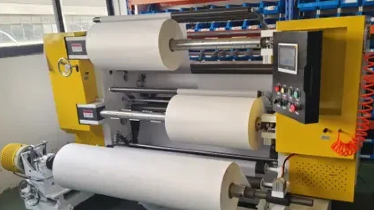
Clean Cutting Is a Core Requirement
No slitting machine solution is complete without reliable cutting quality. Paper and film each require precise slit formation, but the way that precision is achieved may differ depending on the material.
Paper often benefits from stronger cutting methods that create neat, stable edges. Film may require a cutting system that minimizes drag, distortion, and heat-related effects. The key is to match the cutting method to the material instead of expecting one setup to suit every application.
Choosing the Right Cutting Method
Different materials may require razor slitting, shear slitting, or score slitting. Each method offers benefits for certain material types and production goals.
Razor Slitting
Razor slitting is commonly used for thinner films and lightweight webs. It can provide efficient cutting when the material is suitable and the setup is correct. For film applications, it is often valued for its direct cutting action and relatively simple blade arrangement.
Shear Slitting
Shear slitting is widely used for paper, laminates, foil, and some stronger film structures. It is often selected when cleaner edges and more controlled cutting are required. For many paper products, shear slitting offers strong performance and reliable edge quality.
Score Slitting
Score slitting may be used in specific applications where material type and operational preference make it suitable. It should be evaluated carefully based on actual processing needs.
Rewinding Quality Is Part of the Solution
A slitting machine does not truly succeed if it cuts accurately but rewinds poorly. For both paper and film, rewind quality is a major part of finished product value.
A good rewind section helps create rolls with proper hardness, aligned edges, and consistent build quality. If rewinding is unstable, problems can appear later in storage, transport, printing, laminating, or packaging. That means slitting machine solutions must look beyond the cutting zone and address the complete roll-building process.
Why Rewinding Matters for Paper
Paper rolls that are too loose may become unstable during handling. Rolls that are too tight may deform, flatten, or feed poorly later. Strong rewind control helps avoid these issues by managing tension and roll formation carefully.
Why Rewinding Matters for Film
Film rolls can develop telescoping, stretching, blocking, or uneven winding if rewind control is not matched to the material. A better slitting machine solution helps prevent these defects and improves downstream performance.
Table: Key Slitting Machine Solutions for Paper and Film
Solution Area | Importance for Paper | Importance for Film | Practical Benefit |
Tension control | Keeps web stable and supports even rewinding | Prevents stretching, wrinkling, and web breaks | Better process stability |
Suitable cutting method | Improves edge cleanliness and width consistency | Protects thin webs and improves slit quality | Cleaner finished rolls |
Web guiding | Reduces tracking errors | Prevents drift in sensitive materials | More accurate slitting |
Rewind control | Maintains roll shape and hardness | Builds smooth, balanced rolls | Easier storage and downstream use |
Stable unwind system | Feeds parent roll evenly | Protects delicate web entry conditions | Fewer startup defects |
Operator-friendly controls | Simplifies setup and repeat jobs | Helps faster response to tension changes | Lower adjustment time |
Strong machine structure | Supports long-run consistency | Reduces vibration and instability | Better repeatability |
Web Guiding and Unwind Stability Also Matter
Good slitting machine solutions are not only about blades and rewind shafts. Web guiding and unwind stability also play major roles in daily production.
If the parent roll enters the process unevenly, paper may track poorly and film may drift before cutting even begins. A stable unwind section helps feed the material smoothly into the line, while web guiding keeps the web aligned as it moves toward the slitting section.
Better Guiding Supports Width Accuracy
Accurate slit width depends on stable alignment. If the web drifts from side to side, even a good cutting system may produce off-spec rolls. Good guiding helps reduce these errors and supports more consistent production.
Stable Entry Conditions Reduce Startup Scrap
Many slitting losses happen during the first stage of setup and startup. A smoother unwind system helps the material settle into proper running conditions faster, which reduces waste and improves efficiency.
Operator Experience Influences Daily Performance
A technically capable machine can still underperform if it is difficult to operate. That is why practical slitting machine solutions for paper and film should also consider the operator experience.
In daily factory work, operators need to change widths, adjust blades, monitor tension, and handle different roll structures. Machines with clear controls, practical settings, and easier adjustment features help reduce errors and improve repeatability.
Faster Changeovers Improve Output
Many converting lines process multiple orders within one shift. If a slitting machine allows quicker setup and simpler adjustment, more time can be spent on productive running instead of repeated corrections.
Clear Monitoring Helps Prevent Bigger Problems
When operators can observe tension, alignment, and rewind performance easily, they can respond to small issues before they become serious production interruptions. This improves both efficiency and confidence on the shop floor.
Flexible Solutions Support Mixed Production Needs
Many manufacturers do not process only paper or only film. They may run several material types depending on customer demand. In these cases, slitting machine solutions must offer enough flexibility to support changing applications without sacrificing too much stability.
From our point of view, this is where machine selection becomes especially important. A machine that can adapt to multiple materials, slit widths, and rewinding requirements often provides better long-term value than one designed only for a narrow process range.
Match Capability to Real Production Needs
The best solution is not always the most complicated one. It is the one that fits the actual material mix, production schedule, and quality standard of the factory. Evaluating those needs carefully helps avoid overbuying or choosing a machine that cannot support future growth.
Long-Term Benefits of Better Slitting Solutions
When paper and film are processed on a well-matched slitting machine, the gains are visible not only in one production run but over time. Better control reduces material waste, improves finished roll consistency, shortens setup time, and lowers the need for manual correction.
These long-term benefits matter because both paper and film can represent significant material value. Any instability during slitting can lead to repeated losses. Better slitting solutions help protect that value while supporting smoother workflow across the plant.
Conclusion
Slitting machine solutions for paper and film must balance precision, flexibility, and control. Paper needs strong edge quality, stable rewinding, and reliable roll formation. Film requires careful tension handling, smooth web transport, and better protection against wrinkles, stretch, and drift. A suitable slitting machine brings these needs together by supporting stable running from unwind to rewind.
For manufacturers processing paper, film, or both, the right slitting solution can improve cutting accuracy, reduce waste, strengthen finished roll quality, and make daily production more efficient. In our view, the best equipment decision comes from understanding real material behavior and choosing a machine that fits practical production demands. If you are reviewing slitting machine solutions for paper and film and want to explore a more suitable option, Longterm Machinery is worth contacting for further information.
FAQ
Q: What are the main slitting machine solutions for paper and film?
A: The main solutions include stable tension control, suitable cutting methods, reliable web guiding, strong rewind performance, and operator-friendly adjustment for different paper and film materials.
Q: Why is tension control important in paper and film slitting?
A: Tension control is important because it keeps the web stable during processing, helping reduce wrinkles, tracking errors, stretching, and poor rewind quality.
Q: How does a slitting machine improve finished roll quality for paper and film?
A: A slitting machine improves finished roll quality by maintaining accurate slitting, controlling rewind tension, and producing rolls with neat edges and more consistent structure.
Q: Can one slitting machine handle both paper and film effectively?
A: Yes, one slitting machine can handle both paper and film effectively if it offers the right tension range, suitable cutting setup, stable guiding, and flexible rewind control for different material behaviors.


)