In modern converting and flexible material processing, cutting efficiency is not simply about running faster. It is about producing more usable rolls in less time, with less waste, fewer stoppages, and more consistent quality. That is exactly where a slitting machine becomes critical. Whether we process film, paper, foil, laminate, nonwoven fabric, or other roll materials, the slitting stage has a direct impact on production flow, finished roll quality, and operating cost.
From our perspective, many manufacturers first focus on upstream printing, coating, or laminating performance, but the final cutting step often determines whether that earlier work can truly be converted into saleable product. If slit widths vary, edges fray, tension drifts, or finished rolls rewind poorly, the result is lost efficiency across the line. A reliable slitting machine helps prevent these issues by combining mechanical stability, tension balance, accurate control, and smoother operator interaction into one coordinated process.
Cutting Efficiency Is More Than Speed
When people talk about cutting efficiency, they often think only about meters per minute. In real production, that is only one part of the picture. A machine may run fast, but if it creates excessive trim waste, produces uneven rolls, or requires constant manual correction, actual efficiency remains low.
A high-performing slitting machine improves efficiency in several connected ways. It helps maintain stable web travel, keeps each slit width accurate, reduces defects during cutting, improves finished roll structure, and shortens downtime during setup or changeover. In other words, efficiency comes from control, not just motion.
The Real Meaning of Efficient Slitting
Efficient slitting usually includes the following results:
Stable running at practical production speed
Consistent slit width across the full web
Clean cut edges with minimal dust or burrs
Low scrap at startup and during operation
Strong rewinding quality for downstream handling
Fewer stops caused by alarms, material drift, or roll defects
Easier operation for setup, adjustment, and repeat jobs
When these conditions are met together, the production line becomes more predictable and more profitable.
How a Slitting Machine Supports the Entire Cutting Process
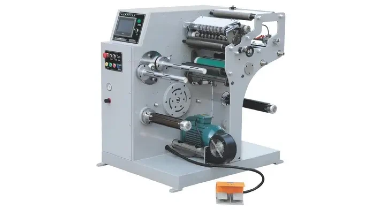
A slitting machine is not only a cutting device. It is a coordinated system made up of unwind control, web guiding, tension regulation, slitting structure, rewind control, and machine interface. Each section contributes to cutting efficiency, and weakness in one area can reduce the performance of the whole line.
Unwind Stability Reduces Early-Stage Problems
The process begins at the unwind section. If the parent roll feeds unevenly, the web can shift, wrinkle, or stretch before it even reaches the slitting zone. That immediately affects cut accuracy and roll quality.
A well-designed slitting machine keeps the unwind process stable by controlling roll release, braking force, and web alignment. This allows the material to enter the cutting section in a consistent condition. When the incoming web is steady, the machine can maintain accuracy more easily, and the operator spends less time correcting basic feeding issues.
Tension Control Keeps the Web Under Control
Tension is one of the most important factors in slitting efficiency. Too much tension can stretch sensitive materials, distort dimensions, or cause breaks. Too little tension can lead to wrinkles, wandering, and poor rewind quality.
A slitting machine improves cutting efficiency by maintaining appropriate tension from unwind to rewind. Stable tension helps the material stay flat, keeps the web path predictable, and supports uniform cutting performance. This is especially important when processing thin films, aluminum foil, composite materials, or lightweight paper grades where even small tension changes can cause visible defects.
Web Guiding Improves Slit Accuracy
If the material drifts sideways during operation, even a sharp blade cannot maintain accurate slit width. Web guiding systems help keep the material aligned as it moves through the machine. This reduces width deviation, improves edge quality, and prevents cumulative errors across multiple narrow rolls.
In practical terms, good web guiding means fewer off-spec products and less need for manual intervention. It also supports faster setup because operators can reach stable running conditions sooner.
The Direct Relationship Between Cutting Method and Efficiency
Different materials require different cutting approaches. Choosing the right slitting method has a major influence on efficiency, finished edge condition, and machine stability.
Razor Slitting for Thin and Soft Materials
Razor slitting is often used for films, tapes, labels, and other lightweight webs. It can deliver clean results at high speed when the material is suitable. For the right application, it supports efficient operation because blade replacement is simple and the cutting action is direct.
However, razor slitting is not universal. If the material is too thick, too abrasive, or structurally complex, edge quality may suffer.
Shear Slitting for Stronger Cutting Performance
Shear slitting uses paired upper and lower knives and is widely preferred for paper, laminate, foil, and many packaging materials. This method often provides cleaner and more controlled edges, especially for thicker or tougher webs.
Because edge quality remains more stable, shear slitting can reduce rejects and improve downstream roll usability. That makes it a strong contributor to overall cutting efficiency, especially in demanding production environments.
Score Slitting for Specific Applications
Score slitting is useful for some materials where pressure-based cutting is practical. It may not offer the same flexibility as other methods, but in the proper setting it can support stable, repeatable production.
From our experience, efficiency improves most when the cutting method matches the material structure, thickness, coating condition, and final roll requirements.
Key Machine Factors That Improve Cutting Efficiency
Below is a practical summary of how different machine functions contribute to better slitting results.
Machine Factor | How It Improves Cutting Efficiency | Typical Production Benefit |
Stable unwind system | Feeds material smoothly into the line | Fewer wrinkles and startup issues |
Accurate tension control | Keeps the web flat and balanced | Better slit precision and less waste |
Web guiding system | Maintains alignment during running | More consistent slit width |
Suitable slitting method | Matches the material and cutting demand | Cleaner edges and fewer defects |
Strong rewind control | Builds finished rolls evenly | Better roll quality for storage and use |
Operator-friendly controls | Simplifies setup and adjustment | Less downtime and faster changeover |
Durable mechanical structure | Reduces vibration and instability | More reliable high-speed production |
Why Edge Quality Matters for Efficiency
Some people view edge quality as only a cosmetic issue, but it has a direct effect on efficiency. Rough, dusty, wavy, or fused edges can create problems during packing, printing, lamination, or end use. That means defective rolls may need rework, rejection, or customer replacement.
A slitting machine improves efficiency by creating cleaner edges that reduce these downstream risks. Good edge quality comes from several combined factors: proper tension, correct blade setup, stable web travel, and a machine structure that minimizes vibration.
Cleaner Cuts Mean Less Waste
Poor cutting creates trim dust, uneven edges, and more startup scrap. Cleaner cuts allow operators to reach acceptable production faster and maintain it longer. This increases the usable output from each parent roll.
Better Edges Improve Product Value
Even when a roll is dimensionally correct, poor edges can reduce customer confidence and create handling issues. Consistent edge quality supports better finished product appearance and smoother downstream conversion. That makes cutting efficiency not only a factory issue, but also a customer satisfaction issue.
Rewinding Quality Is a Major Part of Cutting Efficiency
A slitting machine does not finish its job at the blade. The rewind section is equally important. If finished rolls are loose, telescoped, too hard, or unevenly wound, much of the value created by accurate cutting is lost.
Efficient slitting includes efficient rewinding. The machine must build finished rolls with stable tension, proper roll hardness, and neat edges from start to finish. This helps protect product quality during storage, transport, and later use.
Good Rewinding Reduces Handling Problems
Poorly wound rolls may collapse, shift, wrinkle, or become difficult to load into downstream equipment. This creates hidden inefficiency beyond the slitting line itself. A good slitting machine reduces these risks by keeping rewind pressure and tension under control.
Stable Rolls Support Faster Next-Step Processing
When finished rolls are uniform and well-formed, they can move directly into the next production stage with less inspection and less correction. That is another reason slitting quality has a broad effect on total manufacturing efficiency.
Operator Experience Also Influences Efficiency
Even a technically strong slitting machine can lose efficiency if setup is complicated or daily adjustments are difficult. In real production, the operator interface matters. Easy knife positioning, clear tension settings, accessible controls, and stable recipe storage all help improve working efficiency.
When a machine is easier to operate, training time decreases and repeat orders become easier to run. Operators can respond faster to material changes and production demands without relying on excessive trial and error.
Faster Changeovers Create More Usable Production Time
Many factories process multiple widths, materials, and roll formats in one day. In these cases, changeover time becomes a major efficiency factor. A slitting machine with practical adjustment design can reduce time lost between jobs.
Better Monitoring Prevents Small Problems From Growing
Modern control systems can help operators identify tension fluctuation, alignment drift, and abnormal roll conditions early. Small corrections made quickly are much better than long interruptions after defects already appear.
How the Right Slitting Machine Helps Reduce Total Production Cost
Although the discussion often starts with cutting speed, the real business value of a slitting machine is broader. Better cutting efficiency lowers total production cost by reducing waste, labor pressure, downtime, and quality complaints.
When we evaluate slitting performance, we do not only ask how fast the machine can run. We also ask:
How much startup scrap does it generate?
How often does it need manual correction?
How stable is slit width over time?
How well do finished rolls perform in the next process?
How many defects come from tension, drift, or poor rewinding?
A machine that performs well in these areas often creates more value than a machine that simply advertises a higher top speed.
Choosing a Slitting Machine With Efficiency in Mind
Not every slitting machine is right for every factory. The best choice depends on material type, thickness range, required slit widths, production volume, and final quality expectations.
From our viewpoint, buyers should focus on matching the machine to real production needs. A practical evaluation should include material compatibility, tension performance, slitting accuracy, rewind quality, ease of operation, and long-term reliability. It is better to choose a machine that runs consistently in daily work than one that looks impressive only on paper.
Conclusion
How a slitting machine improves cutting efficiency can be summed up simply: it gives better control throughout the whole converting process. From stable unwinding and accurate tension control to precise slitting and smooth rewinding, it helps turn raw material rolls into finished products with less waste, better consistency, and fewer production problems.
In daily production, real efficiency depends on precision, stability, and repeatability. A well-designed slitting machine helps reduce operator workload, improve finished roll quality, and keep the line running with fewer interruptions. For manufacturers looking to improve cutting performance, it is more effective to focus on machine design, tension control, cutting method, and rewind quality. For more suitable solutions and practical support, Longterm Machinery is worth learning more about.
FAQ
Q: How does a slitting machine improve cutting efficiency?
A: A slitting machine improves cutting efficiency by keeping web tension stable, maintaining accurate slit widths, reducing waste, and producing finished rolls with better rewinding quality.
Q: Why is tension control important in slitting machine performance?
A: Tension control is important because it keeps the material flat and stable, which helps prevent wrinkles, width deviation, edge defects, and poor rewind results during cutting.
Q: Does the slitting method affect cutting efficiency?
A: Yes, the slitting method affects cutting efficiency because different materials need different cutting approaches to achieve clean edges, stable running, and lower defect rates.
Q: Why is rewinding quality part of slitting machine efficiency?
A: Rewinding quality matters because neatly wound finished rolls are easier to store, transport, and use in downstream production, reducing hidden waste and handling problems.


)