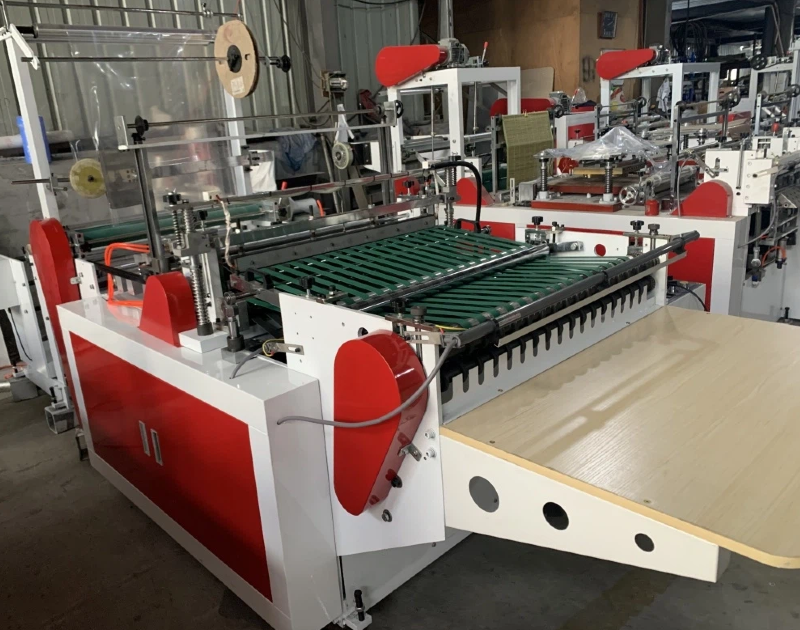
Rising packaging costs continue to challenge manufacturers across industries, especially with increasing material prices, labor costs, and stringent consumer expectations. Businesses now require solutions that not only reduce expenses but also improve production efficiency and product presentation. Yancheng Longterm Machinery Co.,Ltd offers a practical approach with its Bag Making Machine, providing a combination of automation, material optimization, and customization to address these challenges. This article explores three core ways a Bag Making Machine can help companies cut packaging costs while creating added value and operational flexibility.
Reduce Per-Unit Cost by Controlling Material and Process
One of the most straightforward methods to lower packaging costs is to take control of the materials and production process. Traditionally, companies rely on third-party suppliers for pre-made bags, which adds external margins and limits flexibility. Producing bags in-house allows companies to manage material quality, dimensions, and thickness, ultimately lowering per-unit costs.
Modern Bag Making Machines are designed to optimize material usage. Features such as nesting, cut-to-length systems, and precise tension control help minimize film or paper waste. For instance, a mid-size packaging company implemented a Bag Making Machine and experienced a significant drop in scrap material, while production efficiency remained high. This demonstrates the impact of in-house production on raw material costs.
Flexibility is another advantage. Manufacturers can adjust bag sizes, material types, and thickness according to seasonal demand or market trends, preventing overproduction and excess inventory. Additionally, the machine can handle alternative materials like biodegradable films, recycled plastics, and multi-layer laminates, allowing companies to experiment with innovative packaging solutions without committing to long-term supplier contracts.
Automated production also ensures consistent quality, which is critical for minimizing waste. Defective or inconsistent bags, a common issue with manual production, can inflate costs indirectly by increasing rework or returns. With a Bag Making Machine, every bag meets precise specifications, reducing scrap and ensuring reliable output.
Finally, on-demand bag production allows businesses to run small batches efficiently, responding quickly to changing orders without incurring unnecessary setup costs. By combining material optimization, in-house production control, and quality assurance, a Bag Making Machine delivers measurable cost reductions per unit while maintaining production flexibility.
Improve Throughput and Reduce Labour Costs
Automation is a critical factor in reducing packaging costs, and a Bag Making Machine enhances both throughput and labor efficiency. Manual bag production requires significant manpower, increases the risk of human error, and slows down workflows. Automated systems streamline processes such as cutting, folding, sealing, and stacking, reducing manual intervention and labor expenses.
Automation ensures consistent quality, reducing the risk of defective products and returns. Uneven seals or misaligned edges, common in manual operations, are virtually eliminated. A logistics-focused packaging facility implemented a fully automatic Bag Making Machine and noted smoother workflow, fewer interruptions, and predictable output schedules, which directly translated to labor savings.
Throughput improvements are particularly relevant for scaling operations. Faster production allows businesses to meet larger orders without hiring temporary staff or paying overtime. Semi-automatic machines provide an entry-level solution for smaller facilities and allow gradual scaling as production demand grows.
Real-world examples illustrate these advantages. A mid-sized consumer goods company adopted a Bag Making Machine to automate repetitive bag production steps. Production errors decreased, manual labor hours dropped, and employees could focus on quality control and value-added tasks. Planning became more predictable, and production bottlenecks were minimized.
Moreover, automation reduces downtime associated with manual adjustments, material feeding, and quality inspection. Consolidating multiple steps into a single workflow improves overall efficiency, enabling companies to meet high-volume orders with fewer resources, further cutting operational costs over time.
Add Value Through Branding and Customization
Reducing packaging costs extends beyond material and labor savings. Bag Making Machines enable businesses to add value through branding and customization, improving revenue potential while reducing indirect costs. On-demand printing, variable data printing, and personalized designs allow companies to create unique packaging in-house without relying on third-party printing services.
High-quality, uniform bags reduce returns and complaints. Consistent sealing, dimensions, and materials protect products during transport, minimizing the risk of damage. By controlling production quality, companies ensure that every bag meets brand standards while also lowering operational waste.
Customization also supports marketing and competitive differentiation. Well-designed branded packaging enhances shelf appeal, customer perception, and perceived value. A mid-sized health product distributor used a Bag Making Machine to produce personalized packaging for multiple product lines, reducing reliance on stock bags and improving brand visibility in retail settings.
Flexible customization enables efficient response to seasonal campaigns, limited-edition releases, or promotional activities. Companies can produce targeted designs for specific regions, events, or product variations without long lead times or additional supplier costs. This agility strengthens market responsiveness while controlling overall packaging expenses.
Sustainability and Regulatory Compliance: Long-Term Cost Benefits
Environmental sustainability and regulatory compliance are becoming increasingly important factors in packaging strategy. Bag Making Machines provide the flexibility to produce bags from diverse materials, including recyclable plastics, paper, non-woven fabrics, or biodegradable films, ensuring compliance with regulations and meeting consumer expectations.
Producing sustainable bags in-house allows companies to optimize material use and reduce waste, mitigating higher upfront costs associated with eco-friendly materials. For example, precise cutting, nesting, and automated tension control reduce material loss while ensuring quality output. Sustainable packaging also enhances brand image, building consumer loyalty and potentially allowing premium pricing for environmentally responsible products.
Compliance with national and international packaging regulations prevents fines, shipment delays, or restricted market access, which can lead to costly operational disruptions. Bag Making Machines capable of handling multiple materials and custom designs ensure compliance across different regions and product categories.
Consumers increasingly value eco-conscious brands, and businesses that proactively adopt sustainable packaging practices often see higher repeat purchase rates and improved retention. By integrating sustainability into production, companies achieve long-term financial benefits beyond immediate material or labor cost reductions.
How to Calculate Expected Savings and Next Steps
Estimating potential savings from a Bag Making Machine involves evaluating several factors: material costs, labor expenditure, production efficiency, defect rates, branding benefits, and long-term sustainability impact. A practical approach includes:
Comparing costs of third-party bags with projected in-house production.
Calculating labor savings from automation and workflow optimization.
Assessing material waste reduction through precise cutting, nesting, and layout management.
Evaluating revenue potential from branding, customization, and market differentiation.
Considering long-term benefits of sustainable packaging practices and regulatory compliance.
Yancheng Longterm Machinery Co.,Ltd provides support with tailored cost-savings assessments and sample calculations. By integrating a Bag Making Machine into existing production lines, businesses gain clear insights into efficiency, labor, and material savings, along with enhanced product quality.
Conclusion
In conclusion, a Bag Making Machine offers comprehensive cost-saving opportunities: controlling per-unit material expenses, improving throughput and labor efficiency, and adding value through branding and customization. Combined with sustainability and regulatory compliance, these factors contribute to long-term operational and financial benefits. Yancheng Longterm Machinery Co.,Ltd provides expert solutions to optimize your packaging process with advanced bag production equipment, helping companies enhance efficiency, reduce waste, and strengthen brand value. Contact us today to explore how a bag production solution can transform your operations and deliver measurable cost savings across your production lines.


)